Eucommia bark | Traditional Herbal Medicines
🌿 Eucommia Bark – A TCM Herb for Kidney Support, Strong Bones and Healthy Blood Pressure
Eucommia bark (杜仲 – Du Zhong) is a well-known TCM herb traditionally used to nourish the Kidney, strengthen tendons and bones, and support the lower back and knees.
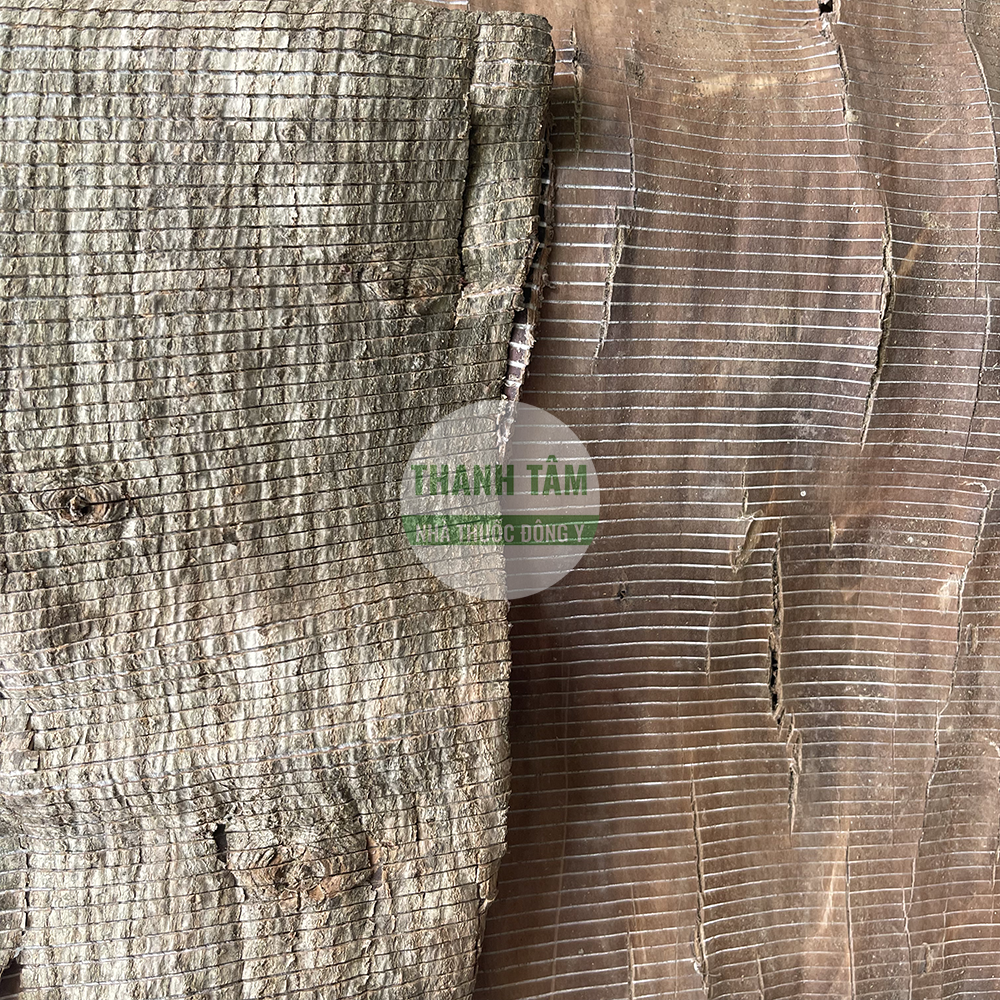
Eucommia bark traditionally used to nourish the Kidney and strengthen tendons and bones
- Scientific name / Pinyin / Chinese: Eucommia ulmoides Oliv. / Du Zhong / 杜仲
- Flavors, Nature – Meridian: Sweet and mildly Pungent flavors, Warm nature – enters the Liver and Kidney meridians
- Main benefits: Traditionally nourishes the Kidney, strengthens tendons and bones, supports the lower back and knees, promotes endurance, and helps maintain healthy blood pressure
- Reference dosage: 6–12 g per day, commonly used in decoctions, herbal soups, powders, or herbal wine
1. Origin and description
Eucommia bark is the dried stem bark of Eucommia ulmoides, a tree native to China and the best-known member of the Eucommiaceae family. The tree can reach approximately 10–20 meters in height.
One of its most distinctive features is the presence of fine, elastic, white fibers inside the bark. When a genuine piece is gently broken or pulled apart, these sticky fibers stretch between the separated surfaces.
Good-quality dried bark is usually brown to purplish brown on the outer surface. The inner surface contains visible white, thread-like fibers. It has a mildly Sweet flavor, a Warm nature, and a light characteristic aroma.
2. Related names of Eucommia bark
Other names: Đỗ trọng, Tư trọng, Miên trọng, Đỗ trọng bì, Xuyên đỗ trọng, Hardy rubber tree bark, and Chinese rubber tree bark
Scientific herbal name: Eucommia ulmoides Oliv.
Pinyin: Du Zhong
Chinese name: 杜仲
3. Flavors, Nature – Meridian
According to TCM, Eucommia bark has Sweet and mildly Pungent flavors with a Warm nature. It enters the Liver and Kidney meridians.
Its Warm nature is traditionally associated with supporting Yang and warming patterns of weakness or Cold. The Sweet quality has a nourishing effect, while the mildly Pungent quality helps promote movement through the meridians.
Because the Liver is traditionally related to the tendons and the Kidney to the bones and lower back, this herb is frequently selected for weakness affecting the spine, knees, and legs. It is also used for people with Cold limbs and reduced vitality.
4. Benefits of Eucommia bark in TCM
Eucommia bark is mainly classified as a Kidney-nourishing herb that strengthens tendons and bones. Its traditional applications include:
- Supporting the lower back and knees: Commonly used for chronic lower-back discomfort, weak knees, tired legs, and reduced mobility associated with Kidney deficiency.
- Strengthening tendons and bones: Included in formulas for physical weakness, age-related decline, postpartum recovery, and discomfort after prolonged or heavy physical work.
- Supporting healthy blood pressure: Traditionally used in combinations intended to maintain circulation and healthy vascular function.
- Promoting vitality and endurance: May be selected for fatigue, reduced stamina, Cold limbs, and low physical resilience.
- Supporting the Liver and cardiovascular system: The bark contains naturally occurring plant compounds, including lignans and iridoids, that are being studied for antioxidant activity.
5. How to use and dosage
The reference dosage is generally 6–12 g per day.
- Decoction: Simmer 6–12 g with prepared Rehmannia root, Morinda root, Achyranthes root, or Drynaria rhizome according to professional guidance.
- Herbal wine: Traditionally combined with Morinda root and Epimedium to support vitality and strengthen the lower back and knees. Alcohol preparations are not suitable for everyone.
- Herbal food: May be simmered with pork bones or black chicken in nourishing soups used during recovery from illness or childbirth.
- Powder or pills: The dried bark may be processed into powder and included in traditional Kidney-supporting pills.
New users are sometimes advised to begin with 3–6 g to assess tolerance.
6. Indications and contraindications
Indications
- Lower-back discomfort, weak knees, or tired legs associated with Kidney deficiency.
- Mild sciatica-like discomfort or age-related stiffness as part of a professionally selected formula.
- Postpartum weakness, reduced energy, or lower-back fatigue.
- Mildly elevated or fluctuating blood pressure that is already being medically monitored.
- Physical fatigue in people who perform heavy labor or intensive exercise.
- Kidney Yang deficiency patterns with Cold limbs, fatigue, and reduced vitality.
Contraindications
- Avoid use during acute fever or Heat-related illness unless professionally advised.
- Use cautiously in people with Yin deficiency and excessive internal Heat.
- People with very low blood pressure should avoid unsupervised use because the herb may further affect blood-pressure control.
- Pregnant women should consult a doctor or qualified Herb doctor before use.
- People taking antihypertensive medicines or blood thinners should ask a healthcare professional about possible interactions.
7. Reference herbal combinations with Đỗ trọng
- Chicken tonic soup: Combines Chinese yam, Codonopsis root, Astragalus root, lotus seed, Solomon’s seal, prepared Rehmannia root, Dong Quai, Chuan Xiong, Angelica dahurica root, Đỗ trọng, goji berries, and red dates.
- Tendon-and-bone strengthening decoction: Combines Đỗ trọng with prepared Rehmannia root and Morinda root for chronic lower-back weakness and tired knees.
- Eucommia pork-bone soup: A nourishing traditional dish commonly prepared to support postpartum recovery and physical strength.
- Eucommia and Morinda herbal wine: Traditionally used to support stamina, vitality, and discomfort associated with Kidney deficiency.
- Blood-pressure support combination: Combines Đỗ trọng with Gambir vine and self-heal herb in traditional practice.
- Kidney-deficiency lower-back formula: May combine Đỗ trọng, goji berries, deer-hide gelatin, schisandra berries, phellodendron bark, Achyranthes root, Dipsacus root, Rehmannia root, dodder seed, and Chinese yam.
8. Frequently asked questions
- Can Eucommia bark be used every day? Some people use 6–9 g daily. Long-term use should match the individual’s constitution and health condition.
- Does it increase blood pressure? It is traditionally used to support healthy blood pressure rather than raise it. People taking blood-pressure medicine should still monitor their readings.
- Can people with a herniated disc use it? It may support comfort and strength but cannot correct a herniated disc or replace medical treatment or physiotherapy.
- Is it suitable after childbirth? It appears in postpartum formulas for lower-back weakness and recovery, but timing and dosage should be professionally assessed.
Nguồn tham khảo
- Dược điển Việt Nam.
- Lương y Hy Lãn Hoàng Văn Vinh, Cây thuốc vị thuốc Đông y, Nhà xuất bản Hà Nội, 2001.
- Tài liệu, hướng dẫn và thông tin chuyên ngành từ Bộ Y tế.
Rate this article
How useful was this article?
Tác giả bài viết