Chinese Quince Fruit | Traditional Herbal Medicines
🌿 Chinese Quince Fruit – A TCM Herb for Relaxing the Tendons, Dispelling Dampness, and Supporting Digestion
Chinese Quince Fruit, known as Mộc qua in Vietnamese, is a familiar herb in TCM. It is traditionally used when the body shows muscle or tendon tightness, leg cramps, Wind-Damp discomfort, or digestive problems associated with Dampness. The herb often appears in formulas for stiff or contracted tendons, aching joints, heaviness of the limbs, vomiting, diarrhea, and cramping when the overall TCM pattern is appropriate.

- Scientific name / Pinyin / Chinese: Fructus Chaenomelis speciosae / Mu Gua / 木瓜.
- Flavors, Nature – Meridian: Sour, Warm – associated with the Liver and Spleen Meridians.
- Main benefits: Relaxes the tendons, supports circulation through the channels, dispels Dampness, and harmonizes the Stomach.
- Reference dosage: Commonly 6–10 g daily, usually prepared as a decoction.
1. Origin and description
Chinese Quince Fruit is the dried medicinal fruit of a plant in the Rosaceae family, commonly identified as Chaenomeles speciosa. The fruit is harvested when mature, cut into slices or sections, and dried for use in traditional formulas.
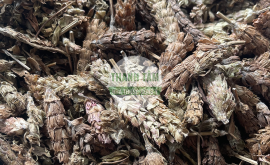
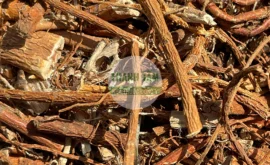
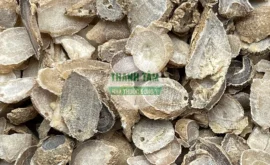
The plant is a small woody shrub or tree that produces firm, aromatic fruits. The dried medicinal material is usually yellow-brown to dark brown, with a dense, slightly hard cut surface, a mild fragrance, and a distinctly Sour taste. Good-quality material should be evenly dried, reasonably intact, free from mold, and contain little foreign matter.
2. Related names of Chinese Quince Fruit
Other names: Mộc qua, Tra tử, Toan mộc qua, Thu mộc qua, Chinese Quince Fruit, Flowering Quince Fruit.
Scientific name: Fructus Chaenomelis speciosae.
Pinyin name: Mu Gua.
Chinese name: 木瓜.
In herbal references and trade, Mu Gua may be listed under botanical names from the genus Chaenomeles. Buyers should verify the medicinal source rather than assuming it is the same as an ordinary culinary quince or papaya.
3. Flavors, Nature – Meridian
In TCM, this herb has a Sour flavor and a Warm nature. It is traditionally associated with the Liver and Spleen Meridians.
The Sour flavor is linked with astringing and relaxing contracted tendons, while the Warm nature is considered helpful for promoting movement and easing heaviness caused by Dampness.
Its Liver association explains its traditional use for tendon tightness, cramps, soreness, and reduced mobility. Its Spleen association relates to transforming Dampness and harmonizing digestion when fullness, vomiting, diarrhea, or heaviness are present. These are TCM concepts rather than modern medical mechanisms.
4. Benefits of Chinese Quince Fruit in TCM
Common traditional uses include:
- Relaxing the tendons and supporting the channels: Often used for muscle tightness, leg cramps, tendon contraction, or stiffness affecting movement.
- Dispelling Wind-Dampness: Frequently included in formulas for aching joints, heavy limbs, or reduced mobility associated with Wind-Damp patterns.
- Transforming Dampness and harmonizing the Stomach: Traditionally used when Dampness affects digestion and causes abdominal fullness, nausea, vomiting, or diarrhea.
- Supporting cramps after vomiting or diarrhea: This is one of its distinctive traditional uses, especially when fluid disturbance and Dampness are accompanied by muscle contraction.
These uses are traditional and do not replace medical evaluation for persistent cramps, severe pain, or ongoing digestive symptoms.
5. How to use and dosage
The most common method is a decoction prepared with other herbs. A typical reference dosage is 6–10 g daily, although some traditional references use approximately 6–12 g depending on the formula and treatment goal.
- Decoction: Used alone or, more commonly, as part of a compound formula.
- Herbal combinations: Often paired with herbs that relax the tendons, dispel Dampness, or regulate digestion.
- Storage: Keep in a dry place away from moisture, mold, and direct sunlight.
Do not use material that becomes soft, develops an unusual odor, or shows visible mold.
6. Indications and contraindications
Indications
Traditional references describe use for contracted tendons, leg cramps, Wind-Damp joint discomfort, heaviness of the lower limbs, poor mobility, and digestive Dampness, including vomiting or diarrhea accompanied by painful cramping.
Contraindications and precautions
People with pronounced internal Heat, very scanty dark urine, Yin-deficiency dryness, or strong Heat signs should use caution. Those with excess stomach acid, chronic gastritis, or peptic ulcer disease should not self-use high doses because the Sour flavor may aggravate digestive irritation.
Pregnant individuals and people receiving long-term treatment should consult a healthcare professional or Herb doctor before use.
7. Reference herbal combinations with Mộc qua
- Wind-Damp aching and heavy limbs: Mộc qua may be combined with Du Huo, Qin Jiao, and Niu Xi in traditional formulas that support mobility and dispel Wind-Dampness.
- Leg cramps and contracted muscles: It may be paired with Bai Shao and Gan Cao to relax tension and support the muscles.
- Vomiting or diarrhea with cramping: Traditional combinations may include Huo Xiang, Sha Ren, and Sheng Jiang when Dampness affects the Spleen and Stomach.
- Digestive Dampness with abdominal fullness: It may be combined with Chen Pi, Hou Po, and Bai Zhu.
- Chronic tendon and joint weakness: Some formulas combine it with Sang Ji Sheng, Du Zhong, and Gou Ji when the presentation is appropriate.
These combinations are for reference only. Formula composition and dosage should be adjusted according to symptoms, constitution, medications, and professional assessment.
8. Frequently asked questions
- Is Mộc qua in this article the same as an ordinary fruit? No. Here, Mộc qua refers specifically to the medicinal Mu Gua used in TCM, generally derived from Chaenomeles fruit and prepared as a dried herb.
- Is it mainly used for joints or digestion? It is used for both. Its best-known traditional actions are relaxing the tendons and transforming Dampness, so it appears in both musculoskeletal and digestive formulas.
- What is the usual daily dosage? A common reference dosage is 6–10 g per day as a decoction, while some formulas may use up to about 12 g.
- Can people with stomach problems use it? Caution is recommended for people with acid reflux, excess stomach acid, chronic gastritis, or peptic ulcers because the Sour taste may increase irritation in some individuals.
- Can it be used for leg cramps? TCM traditionally uses it for certain cramping and tendon-contraction patterns, but recurrent cramps may also relate to dehydration, electrolyte imbalance, circulation problems, medications, or other conditions.
- Can it be used long term? Long-term self-use is not recommended. Duration should depend on the underlying pattern, response, and professional guidance.
👉 Visit Thanh Tam Herbs – a trusted Herbal pharmacy for quality herbs and TCM guidance
Nguồn tham khảo
- Dược điển Việt Nam.
- Lương y Hy Lãn Hoàng Văn Vinh, Cây thuốc vị thuốc Đông y, Nhà xuất bản Hà Nội, 2001.
- Tài liệu, hướng dẫn và thông tin chuyên ngành từ Bộ Y tế.
Rate this article
How useful was this article?
Tác giả bài viết