Mulberry Root Bark | Traditional Herbal Medicines
🌿 Mulberry Root Bark – A TCM Herb for Clearing Lung Heat, Easing Wheezing, and Promoting Fluid Balance
Mulberry Root Bark, known as Tang bạch bì in Vietnamese, is the white inner bark of the root of the white mulberry tree. It has a long history of use in TCM, especially in formulas for cough, wheezing, or difficult breathing associated with Lung Heat. It is also traditionally used to promote fluid movement and support the relief of swelling and reduced urination according to TCM theory.
- Scientific name / Pinyin / Chinese: Cortex Mori albae radicis / Sang Bai Pi / 桑白皮.
- Flavors, Nature – Meridian: Sweet, Cold – associated mainly with the Lung Meridian.
- Main benefits: Traditionally used to clear Lung Heat, support relief of cough and wheezing related to Heat, promote urination, and help reduce swelling according to TCM theory.
- Reference dosage: Commonly 6–12 g daily, mainly prepared as a decoction.
1. Origin and description
Mulberry Root Bark is obtained from the root of the white mulberry tree, Morus alba L., a member of the Moraceae family. The rough outer cork layer is removed before the pale inner bark is used medicinally. The roots are traditionally harvested from late autumn to early spring, cleaned, peeled, and dried.
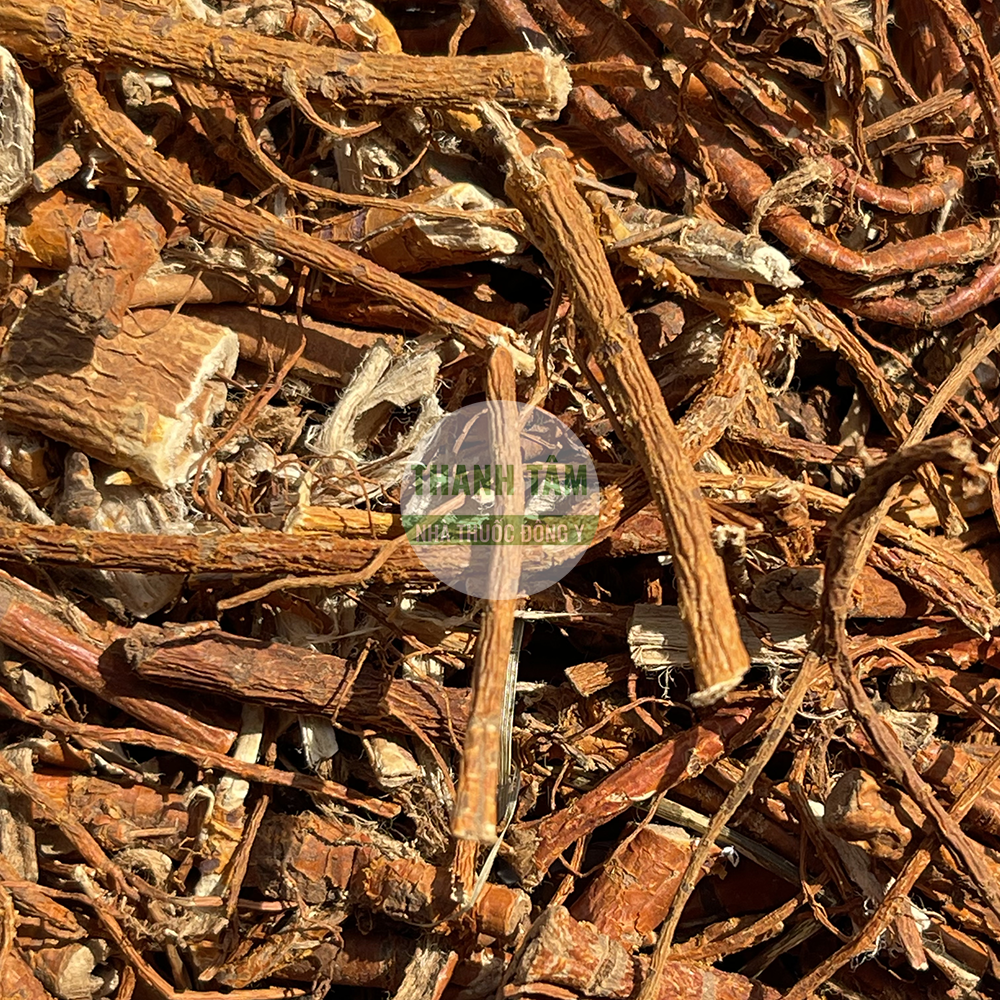
The dried herb appears as flat, trough-shaped, or slightly rolled pieces. The outer surface is white to pale yellow, while the inner surface is pale yellow or grayish yellow with fine longitudinal wrinkles. It is tough and fibrous, with a mild odor and slightly Sweet taste.
2. Related names of Mulberry Root Bark
Other names: Tang bạch bì, Vỏ rễ dâu, Tang căn bạch bì, Bạch tang bì, White Mulberry Root Bark, Mulberry Root Cortex.
Scientific name: Cortex Mori albae radicis; botanical source: Morus alba L.
Pinyin name: Sang Bai Pi.
Chinese name: 桑白皮.
This herb should not be confused with Tang diệp, the mulberry leaf; Tang chi, the mulberry twig; or Tang thầm, the ripe mulberry fruit. Although they come from the same plant, each has different traditional uses in TCM.
3. Flavors, Nature – Meridian
According to traditional herbal references, Mulberry Root Bark has a Sweet flavor and a Cold nature. It is primarily associated with the Lung Meridian.
These properties correspond with its traditional use for clearing Lung Heat and easing cough, wheezing, or rapid breathing when Heat affects the Lung.
In TCM, “Lung Heat” may involve cough, wheezing, yellow phlegm, or Heat in the chest. This traditional pattern is not a modern medical diagnosis.
4. Benefits of Mulberry Root Bark in TCM
Traditional uses include:
- Clearing Lung Heat: Commonly used when cough or difficult breathing is traditionally associated with Heat in the Lung.
- Easing wheezing: It may be included in formulas for cough, wheezing, or shortness of breath when Heat signs are present.
- Promoting fluid movement: Traditionally used to support urination when excess fluid or Dampness accumulates in the body.
- Reducing swelling: It may be referenced for puffiness or edema of the face, around the eyes, or elsewhere when accompanied by reduced urination.
- Supporting productive cough: It may be combined with phlegm-transforming or Heat-clearing herbs depending on the character of the cough and phlegm.
These traditional uses do not replace treatment for asthma, pneumonia, heart failure, kidney disease, or other causes of breathing difficulty or edema.
5. How to use and dosage
A commonly referenced dosage is 6–12 g of dried herb per day, most often prepared as a decoction.
Honey-prepared Sang Bai Pi is also used. The root bark is mixed with honey and gently stir-fried, traditionally directing its use more toward the Lung and cough-related symptoms.
For extracts, granules, capsules, tablets, or compound products, follow the label because their strength may differ from raw herbs.
6. Indications and contraindications
Indications
In TCM practice, Mulberry Root Bark is commonly referenced for Lung Heat patterns with cough, rapid breathing, or wheezing. It may also be used when fluid accumulation contributes to puffiness, swelling, abdominal fullness, or reduced urination.
Contraindications and precautions
Because of its Cold nature, people with Spleen and Stomach Cold patterns, frequent loose stools, abdominal coldness, poor appetite, or digestive weakness should use it cautiously.
Pregnant or breastfeeding individuals, children, people with chronic conditions, and those taking diuretics or blood pressure medicines should consult a healthcare professional or Herb doctor before use.
Seek medical evaluation if cough persists, breathing becomes difficult, chest pain develops, fever is high, blood is present in sputum, or swelling increases rapidly.
7. Reference herbal combinations with Vỏ rễ dâu
- Cough or wheezing associated with Lung Heat: It may be combined with Di Gu Pi, Huang Qin, Gan Cao, or other herbs traditionally used to clear Lung Heat.
- Cough with abundant phlegm: It may be combined with Bei Mu, Gua Lou, or Chen Pi according to the nature and amount of phlegm.
- Swelling with reduced urination: It may be combined with Fu Ling, Ze Xie, or other herbs that support fluid metabolism when appropriate.
- Cough with a sensation of Heat in the chest: Heat-clearing, phlegm-transforming, and cough-supporting herbs may be selected under professional guidance.
These combinations are for traditional reference only. Formulas should be adjusted according to symptoms, constitution, medications, and professional assessment.
8. Frequently asked questions
- Is Mulberry Root Bark the bark from the mulberry tree trunk? No. The medicinal material comes specifically from the root bark of Morus alba after the coarse outer cork layer has been removed.
- Can it be used for every type of cough? No. In TCM, it is mainly associated with cough patterns involving Lung Heat. Cough caused by Cold, allergies, asthma, infection, or other conditions requires separate assessment.
- Can it be used to reduce swelling? It is traditionally used to promote fluid movement and reduce swelling, but edema may be related to the heart, kidneys, liver, circulation, or other medical causes and should be evaluated when persistent.
- How is the honey-prepared form different from the raw herb? Honey preparation is traditionally used to make the herb more moistening and to direct its use more toward supporting the Lung and cough-related symptoms.
- How can good-quality material be selected? Choose dry, fibrous root-bark pieces with a natural white to pale yellow color, no mold or insect damage, and a clearly identified source from a reliable Herbal pharmacy.
👉 Visit Thanh Tam Herbs – a trusted Herbal pharmacy for quality herbs and practical TCM guidance
Nguồn tham khảo
- Dược điển Việt Nam.
- Lương y Hy Lãn Hoàng Văn Vinh, Cây thuốc vị thuốc Đông y, Nhà xuất bản Hà Nội, 2001.
- Tài liệu, hướng dẫn và thông tin chuyên ngành từ Bộ Y tế.
Rate this article
How useful was this article?
Tác giả bài viết