Smilax Rhizome | Traditional Herbal Medicines
🌿 Smilax Rhizome – A TCM Herb for Clearing Heat, Detoxifying, and Supporting Wind-Damp Joint Discomfort
Smilax Rhizome, known as Thổ phục linh in Vietnamese, is a familiar herb in TCM. It is traditionally used in formulas that clear Heat, reduce Toxic-Heat, drain Dampness, and support the joints and tendons. Although market names may vary according to the color of the sliced herb, the core medicinal material is Thổ phục linh, with traditional actions mainly focused on Heat-toxin and Damp-Heat patterns, skin concerns, and Wind-Damp discomfort. This article explains its origin, traditional properties, uses, dosage, precautions, and common herbal combinations.

- Scientific name / Pinyin / Chinese: Smilax glabra Roxb. / Tu Fu Ling / 土茯苓.
- Flavors, Nature – Meridian: Sweet, Bland, Neutral – associated with the Liver and Stomach Meridians.
- Main benefits: Clears Heat, supports detoxification, drains Dampness, and benefits the joints and tendons.
- Reference dosage: Commonly 15–30 g daily, usually prepared as a decoction.
1. Origin and description
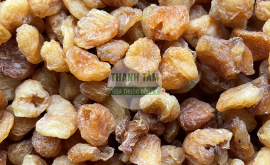
Smilax Rhizome is the dried rhizome of Smilax glabra Roxb., a perennial climbing plant commonly found in hills, forest margins, and moist areas across many parts of Asia, including Vietnam. After harvesting, the rhizome is washed, cleaned of small roots, sliced, and dried. The finished herb appears as irregular pieces with a yellow-brown to dark brown exterior and a pale, yellowish, or reddish-brown interior. Good-quality material should be firm, dry, low in fiber, free from mold, and contain little foreign matter.
2. Related names of Smilax Rhizome
Other names: Thổ phục linh, Cây khúc khắc, Kim cang, Hồng thổ linh, Smilax Rhizome, Glabrous Greenbrier Rhizome.
Scientific name: Smilax glabra Roxb..
Pinyin name: Tu Fu Ling.
Chinese name: 土茯苓.
The names used in local herbal markets may vary. When purchasing, it is best to verify the botanical source and choose clean, properly dried material from a reliable Herbal pharmacy.
3. Flavors, Nature – Meridian
In TCM, this herb has a Sweet and Bland flavor with a Neutral nature. It is traditionally associated with the Liver and Stomach Meridians.
The Sweet quality is traditionally linked with harmonizing, while the Bland quality is associated with draining Dampness. Its Liver and Stomach associations are discussed in relation to the tendons, joints, Dampness, and internal balance. These are TCM concepts rather than modern medical mechanisms.
4. Benefits of Smilax Rhizome in TCM
Common traditional uses include:
- Clearing Heat and supporting detoxification: Frequently included in formulas for Heat-toxin patterns, especially when skin or inflammatory-type symptoms are present.
- Draining Dampness: Traditionally used when heaviness, sticky sensations, or other symptoms are interpreted as Damp or Damp-Heat.
- Supporting joints and tendons: May be included in formulas for Wind-Damp discomfort, stiffness, aching, or reduced flexibility.
- Supporting itchy or irritated skin: Often combined with other herbs in traditional formulas for boils, itchy eruptions, redness, or Damp-Heat skin patterns.
These uses belong to the TCM framework. Persistent skin lesions, severe joint pain, swelling, or fever should be medically evaluated.
5. How to use and dosage
A commonly referenced dosage is 15–30 g daily, most often prepared as a decoction. The exact amount depends on the formula, constitution, and treatment purpose.
- Decoction: Used alone or, more commonly, combined with other herbs.
- Powder: Less common and generally used according to professional instructions.
- Compound formulas: Frequently paired with herbs that clear Heat, drain Dampness, or support the joints and tendons.
Store the herb in a cool, dry place away from moisture. Do not use slices that become soft, develop an unusual odor, or show signs of mold.

6. Indications and contraindications
Indications
Traditional references describe use for Damp-Heat patterns, Wind-Damp joint discomfort, itchy skin eruptions, boils, heaviness of the body, and aching or stiffness of the joints. Selection should depend on the overall TCM pattern.
Contraindications and precautions
People with Liver-Kidney Yin deficiency or pronounced Spleen and Stomach Cold-deficiency should use caution. Pregnant individuals, people taking long-term medication, and those with allergies should consult a healthcare professional or Herb doctor. Long-term high-dose self-use may cause digestive discomfort.
7. Reference herbal combinations with Thổ phục linh
- Wind-Damp discomfort and aching joints: Thổ phục linh may be combined with Dây đau xương and Cỏ xước in traditional formulas intended to support mobility and reduce Dampness.
- Heat-toxin with itchy skin: It may be combined with Honeysuckle Flower and Pu Gong Ying.
- Damp-Heat affecting the skin: Traditional combinations may include Cang Er Zi and Fang Feng depending on the presentation.
- Internal Heat with skin irritation: It may be paired with Gan Cao and Diệp hạ châu in selected traditional formulas.
- Joint discomfort with Dampness: It may be combined with Xi Xian Cao and Du Zhong.
These combinations are for reference only and should be adjusted according to individual constitution and professional assessment.
8. White and red Thổ phục linh: what is the difference?
In the herbal market, white Thổ phục linh usually refers to slices with a lighter interior, often ivory or pale yellow. It is sometimes preferred in formulas focused on clearing Heat, supporting detoxification, or skin concerns.
Red Thổ phục linh usually has a more obvious reddish-brown exterior or interior and is sometimes associated in market practice with formulas for Wind-Damp discomfort and aching joints.
These names are mainly visual trade descriptions. Both forms share the same core traditional uses: clearing Heat, supporting detoxification, draining Dampness, and benefiting the joints. Botanical identification and quality are more important than color alone.
9. Frequently asked questions
- Are white and red Thổ phục linh completely different herbs? Not necessarily. These are commonly market-based descriptions related to the appearance and color of the dried slices.
- Is Thổ phục linh a cooling herb? In TCM, it is generally described as Neutral rather than Cold or Cool, with Sweet and Bland flavors.
- What is the usual daily dosage? A commonly referenced amount is 15–30 g per day, usually prepared as a decoction.
- Can it be used long term? Long-term self-use is not recommended when the individual constitution is unclear or when chronic medical conditions are present. Professional guidance is preferable.
- Can it be used for joint pain? It may appear in traditional formulas for Wind-Damp joint discomfort, but persistent or severe pain should be medically assessed.
👉 Visit Thanh Tam Herbs – a trusted Herbal pharmacy for quality herbs and TCM guidance
Nguồn tham khảo
- Dược điển Việt Nam.
- Lương y Hy Lãn Hoàng Văn Vinh, Cây thuốc vị thuốc Đông y, Nhà xuất bản Hà Nội, 2001.
- Tài liệu, hướng dẫn và thông tin chuyên ngành từ Bộ Y tế.
Rate this article
How useful was this article?
Tác giả bài viết