Star Anise | Traditional Herbal Medicines
🌿 Star Anise – A Warming TCM Herb for Digestion and Cold-Related Abdominal Pain
Star Anise, known as Da Hui Xiang in TCM, is a familiar medicinal herb and culinary spice recognized by its distinctive aroma and star-shaped fruit. Traditionally, it is valued for its Pungent, Warm properties and is used to warm the Spleen and Stomach, support digestion, disperse Cold, and relieve abdominal discomfort associated with Cold patterns.
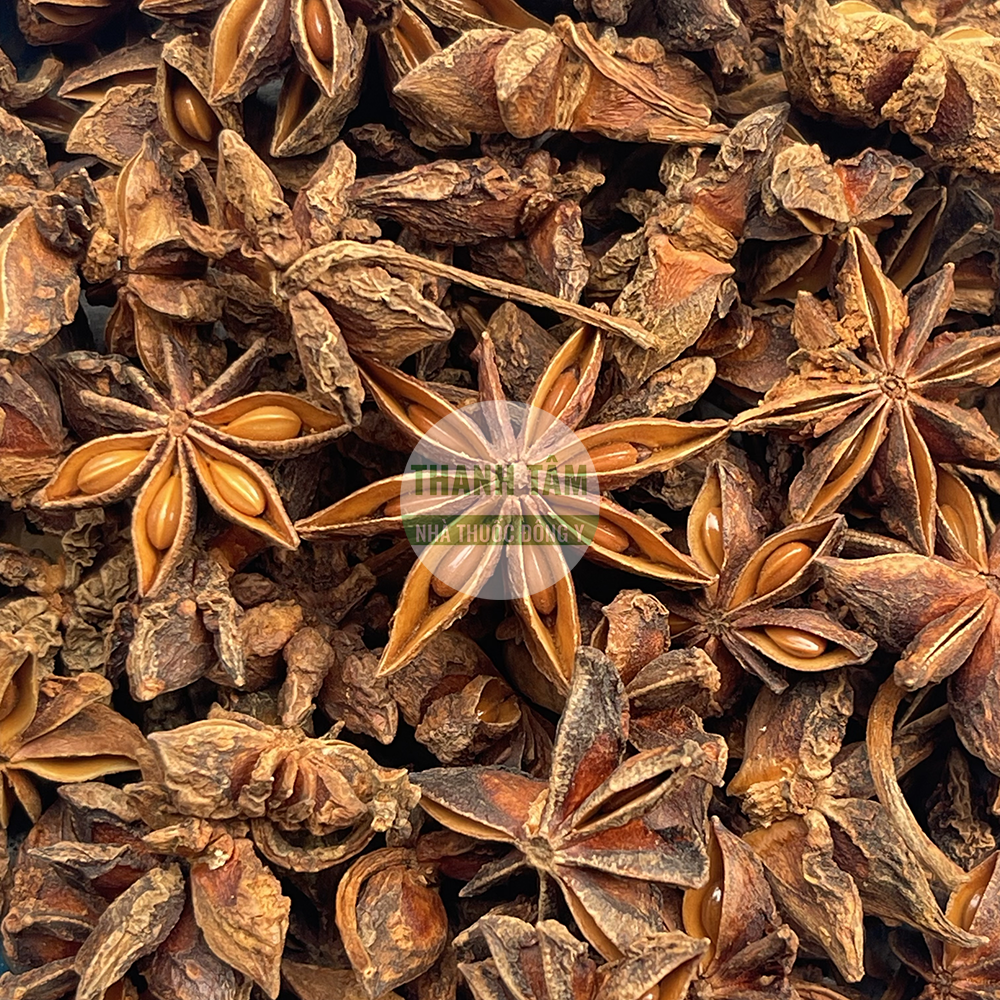
Star Anise – a warming aromatic herb commonly used in TCM
- Scientific name / Pinyin / Chinese: Illicium verum / Da Hui Xiang, Ba Jiao / 大茴香, 八角.
- Flavors, Nature – Meridian: Pungent, Warm – Spleen, Stomach, Kidney.
- Main benefits: Warms the abdomen, supports digestion, disperses Cold, relieves Cold-related discomfort, and provides aromatic digestive support.
- Reference dosage: 3–6 g daily, commonly used as a decoction or in medicinal food preparations.
1. Origin and description
Star Anise is the dried ripe fruit of Illicium verum, an evergreen tree traditionally classified in the Illiciaceae family. The tree generally grows 6–10 meters tall, with thick dark-green leaves and small pale flowers. Its fruit has a distinctive star shape, usually consisting of six to eight pointed segments, with each segment containing a small seed.
The plant is widely cultivated in northern mountainous areas of Vietnam, particularly Lang Son and Cao Bang, as well as in southern China. The fruits are generally harvested before full maturity and then sun-dried or gently dried until they become reddish to dark brown and develop their characteristic strong aroma.
Good-quality medicinal material should have thick, intact segments, a naturally strong fragrance, and no signs of mold, excessive moisture, or unusual odor.
In TCM, the herb is valued both as a medicinal ingredient and as an aromatic spice, especially for its traditional ability to warm the interior and regulate digestive function.
2. Related names of Star Anise
Other names: Đại hồi, Hồi hương, Bát giác hồi, Đại hồi hương, Hoa hồi, Tai vị, Chinese star anise, star anise fruit, eight-pointed anise.
Scientific name: Illicium verum Hook.f.
Pinyin name: Da Hui Xiang or Ba Jiao.
Chinese name: 大茴香 or 八角.
The characteristic star-shaped fruit makes this herb easy to recognize. However, medicinal and culinary material should come from properly identified Illicium verum and a reliable source, as other visually similar species should not automatically be considered suitable for consumption.
3. Flavors, Nature – Meridian
According to TCM theory, this herb is Pungent in flavor, Warm in nature, and enters the Spleen, Stomach, and Kidney Meridians.
The Pungent flavor is traditionally associated with promoting Qi movement and dispersing Cold. Its Warm nature helps warm the Spleen and Stomach, making it suitable for selected patterns involving abdominal Cold, digestive weakness, cramping, or discomfort after consuming cold foods.
Its Kidney Meridian affinity is traditionally associated with warming Kidney Yang and supporting Cold-related discomfort in the lower abdomen or lower back. For this reason, the herb often appears in formulas for internal Cold patterns.
4. Benefits of Star Anise in TCM
- Warms the Spleen and Stomach: Traditionally used to ease abdominal Cold, bloating, fullness, and poor digestion related to Cold patterns.
- Supports relief of Cold-related pain: May help with abdominal cramping, lower abdominal discomfort, or stomach discomfort when Cold is considered a contributing factor.
- Moves Qi and disperses Cold: Traditionally used to improve Qi circulation and reduce sensations of tightness or cramping.
- Supports digestion: Its aromatic nature may help stimulate appetite and reduce digestive heaviness or discomfort.
- Used as an aromatic culinary herb: Frequently added to soups, broths, stews, and medicinal foods for flavor and warming support.
Modern research has identified aromatic compounds such as anethole in Illicium verum. These constituents have been studied for antimicrobial, digestive, and smooth-muscle-related effects. Traditional uses, however, should not replace medical care for persistent abdominal pain, vomiting, fever, or other significant digestive symptoms.
5. How to use and dosage
A commonly referenced medicinal dosage is 3–6 g per day. The appropriate amount may vary according to constitution, preparation method, and the other herbs in a formula.
- Decoction: Simmer the dried fruit in water according to professional guidance. It may be combined with Chen Pi or Gan Jiang in warming digestive formulas.
- Medicinal food: Small amounts are commonly added to soups, stews, and broths to provide aroma and warming support.
- External preparations: Traditional preparations may combine aromatic warming herbs for external use under appropriate guidance.
- Storage: Keep tightly sealed in a cool, dry place away from moisture, heat, and direct sunlight.
Large amounts or prolonged medicinal use are not recommended without professional guidance because the essential oils are highly aromatic and concentrated.
6. Indications and contraindications
Indications
In TCM, Da Hui Xiang may be referenced for Cold abdominal pain, poor digestion, bloating, nausea associated with Cold, Cold sensations in the lower abdomen or lower back, and cold hands and feet. It is particularly associated with Spleen and Stomach deficiency-Cold patterns.
Contraindications and precautions
People with signs of internal Heat, pronounced dry mouth, Heat-related constipation, or high fever should use caution. Pregnant people and young children should seek professional advice before medicinal use.
Only properly identified food-grade or medicinal-grade material should be used. Avoid products that are moldy, unusually discolored, contaminated, or of uncertain botanical origin.
7. Reference herbal combinations with Đại hồi
- Cold abdominal discomfort: May be combined with Gan Jiang and Chen Pi to warm the digestive system and support Qi movement.
- Cold-related lower back discomfort: May be paired with Gui Zhi and Du Zhong in selected traditional formulas.
- Poor digestion and abdominal fullness: May be combined with Sha Ren and Bai Zhu to support the Spleen and digestion.
- Traditional Cold-Damp lower abdominal patterns: Classical combinations may include Da Hui Xiang, Chuan Lian Zi, lychee seed, citrus seed, Rou Gui, Cang Zhu, Mu Gua, and Niu Xi, depending on the individual TCM diagnosis.
These combinations are provided for traditional reference only. A complete formula should be selected according to constitution, symptoms, and TCM pattern differentiation.
8. Frequently asked questions
- Can Star Anise be used every day? Small culinary amounts are commonly used in food. Medicinal doses should not be taken continuously without an appropriate reason or professional guidance.
- Does Star Anise cause internal heat? It is considered Warm in TCM, so people who already show strong Heat signs should use it cautiously.
- What is the difference between Da Hui Xiang and Xiao Hui Xiang? Da Hui Xiang is the star-shaped fruit of Illicium verum, while Xiao Hui Xiang generally refers to fennel seed. They come from different plants and have different appearances and traditional uses.
- Can it be used for digestive discomfort? Traditionally, it is most suitable when digestive discomfort is associated with Cold. Digestive symptoms caused by other conditions may require a different approach.
- How can I choose good-quality material? Select intact, aromatic, dry star-shaped fruits from a reputable source, with no mold, unusual odor, contamination, or excessive discoloration.
👉 Visit Thanh Tam Herbs – a trusted Herbal pharmacy for quality herbs and TCM guidance
Nguồn tham khảo
- Dược điển Việt Nam.
- Lương y Hy Lãn Hoàng Văn Vinh, Cây thuốc vị thuốc Đông y, Nhà xuất bản Hà Nội, 2001.
- Tài liệu, hướng dẫn và thông tin chuyên ngành từ Bộ Y tế.
Rate this article
How useful was this article?
Tác giả bài viết