Creeping fig fruit | Traditional Herbal Medicines
🌿 Creeping Fig Fruit – A Guangdong Herbal Medicine Known as Guang Wang Bu Liu Xing
Creeping fig fruit, known in this context as Guang Wang Bu Liu Xing, is a traditional medicinal material used in Guangdong and derived from the dried fruit structure of Ficus pumila. In traditional Chinese herbal practice, it is used to dispel Wind, drain Dampness, promote Blood movement, reduce swelling, and support lactation in selected postpartum patterns.

The fruit of Ficus pumila is split and dried for traditional herbal use
- Scientific name / Pinyin / Chinese: Fructus Fici Pumilae / Guang Wang Bu Liu Xing / 广王不留行
- Flavors, Nature – Meridian: Sweet and slightly astringent; neutral Nature – enters the Stomach, Liver, and Large Intestine Meridians
- Main benefits: Traditionally used to support Wind-Damp discomfort, promote urination, encourage Blood movement, reduce swelling, and support milk flow in appropriate cases
- Reference dosage: 9–15 g of dried material per day, usually prepared as a decoction
1. Origin and description
Creeping fig fruit is obtained from Ficus pumila L., a climbing plant in the Moraceae family. The species grows as a woody vine that attaches itself to walls, rocks, or tree trunks through small aerial roots. In Vietnam, it is known by several local names, including trâu cổ, xộp, vảy ốc, mộc liên, and sung thằn lằn.
The medicinal part is the mature fig-like fruiting structure. Botanically, this is a hollow receptacle containing many small flowers and fruits inside rather than a simple fruit. After harvesting, it is split open, cleaned, and then sun-dried or gently dried.
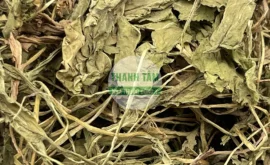
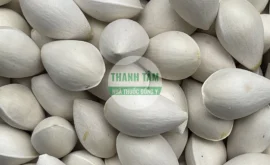
The dried pieces are commonly boat-shaped, with a grayish-yellow to brown outer surface and a reddish-brown interior. The texture is firm and brittle, with a mild, slightly astringent taste.
2. Related names of Creeping fig fruit
Other names: Trâu cổ, Quảng Vương bất lưu hành, Quả xộp, Bị lệ quả, Mộc liên, Lương phấn quả, and Mộc màn thầu.
Scientific name: Fructus Fici Pumilae.
Pinyin name: Guang Wang Bu Liu Xing.
Chinese name: 广王不留行.
It is important to distinguish this herb from Wang Bu Liu Xing / 王不留行 in the Chinese Pharmacopoeia. Standard Wang Bu Liu Xing refers to Vaccariae Semen, the seeds of Vaccaria segetalis. The two medicinal materials come from different plants, look different, and have different traditional applications. They should not be considered interchangeable.
3. Flavors, Nature – Meridian
According to traditional Guangdong herbal standards, Creeping fig fruit is described as Sweet and slightly astringent with a neutral Nature. It is traditionally said to enter the Stomach, Liver, and Large Intestine Meridians.
In TCM terminology, “dispelling Wind and draining Dampness” refers to patterns involving heaviness, swelling, or aching attributed to Wind-Damp accumulation. “Promoting Blood movement” refers to improving the movement of Blood within the traditional framework, while “clearing toxicity” is a traditional term often used for swelling or soreness.
These descriptions belong to TCM theory and should not be interpreted as direct biomedical claims.
4. Benefits of Creeping fig fruit in TCM
- Supporting Wind-Damp discomfort: Traditionally used for aching, heaviness, or restricted movement associated with Wind-Damp patterns.
- Supporting the removal of Dampness: Used in some formulas for swelling, difficult urination, or sensations of Damp accumulation.
- Promoting Blood movement and opening the channels: Sometimes included in formulas for pain associated with stagnation or after minor injury.
- Reducing swelling and supporting traditional “detoxifying” actions: Used in some traditional preparations for localized swelling, sores, or throat discomfort.
- Supporting lactation: Regional practice includes its use in postpartum formulas intended to encourage milk flow when appropriate.
5. How to use and dosage
A typical reference amount is 9–15 g of dried medicinal material per day, adjusted according to the herbal formula and individual condition.
- Decoction: Rinse briefly, simmer in water, and divide the prepared liquid according to professional guidance.
- External preparation: In some traditional applications, a decoction may be used as a wash for localized areas.
- Combined formulas: Companion herbs are selected according to patterns such as Wind-Damp discomfort, stagnation, swelling, or postpartum concerns.
- Storage: Keep in a sealed container in a cool, dry place away from moisture, mold, and insects.
Do not increase the dose, use it continuously for long periods, or prepare alcohol extracts without professional guidance.
6. Indications and contraindications
Traditional indications
In regional Chinese herbal practice, Creeping fig fruit is referenced for Wind-Damp painful obstruction, swelling, certain urination difficulties, diarrhea, pain after injury, and localized swelling. Some folk preparations also use it to support postpartum milk flow.
Contraindications and precautions
Pregnant women should not self-use herbs described as promoting Blood movement. Breastfeeding women should first identify the cause of low milk supply or blocked milk ducts before using herbal products.
People taking anticoagulant or antiplatelet medicines, or those being treated for chronic diseases, should consult a healthcare professional before use. Seek medical attention promptly if there is high fever, severe pain, blood in the urine, or a breast that becomes red, hot, swollen, and painful.
7. Reference herbal combinations with Quả vương bất lưu hành
- For Wind-Damp aches: Creeping fig fruit may traditionally be combined with Du Huo, Sang Ji Sheng, or Wei Ling Xian.
- For swelling and Damp accumulation: Traditional combinations may include Fu Ling, Ze Xie, or Che Qian Zi.
- For pain associated with stagnation: It may be paired with Dang Gui or Chuan Xiong.
- For localized swelling: Traditional formulas may combine it with Pu Gong Ying or Jin Yin Hua.
- For difficulty with milk flow: Some postpartum formulas combine it with other herbs traditionally used to support lactation, but mastitis should be ruled out first.
These combinations are provided for traditional reference only and are not standardized prescriptions for self-treatment.
8. Frequently asked questions
Is this the same as the black Wang Bu Liu Xing seeds?
No. The herb discussed here is the dried fruiting structure of Ficus pumila. Standard Wang Bu Liu Xing in the Chinese Pharmacopoeia is Vaccariae Semen from Vaccaria segetalis.
Can the fruit of Ficus pumila be used medicinally?
Yes, it has a history of regional traditional use, but correct botanical identification, proper processing, and reliable sourcing are important.
Does Creeping fig fruit help increase breast milk?
There is traditional experience supporting this use, but low milk supply has many possible causes. Breastfeeding problems should be assessed before relying on an herbal preparation.
Can it be taken every day?
Long-term self-use is not recommended without a clear indication and professional guidance.
Can it replace medicine for joint pain?
No. Persistent or severe joint pain should be evaluated to identify the underlying cause.
How can good-quality material be recognized?
Choose relatively large, thick, naturally colored dried pieces that are clean, fully dry, free from mold and unusual odors, and supplied by a traceable source.
👉 Visit Thanh Tam Herbs – a trusted Herbal pharmacy offering carefully sourced TCM herbs and professional guidance.
Nguồn tham khảo
- Dược điển Việt Nam.
- Lương y Hy Lãn Hoàng Văn Vinh, Cây thuốc vị thuốc Đông y, Nhà xuất bản Hà Nội, 2001.
- Tài liệu, hướng dẫn và thông tin chuyên ngành từ Bộ Y tế.
Rate this article
How useful was this article?
Tác giả bài viết