Stemona Root | Traditional Herbal Medicines
🌿 Stemona Root – A TCM Herb for Moistening the Lung, Relieving Cough, and External Cleansing
Stemona Root, commonly known as Bách bộ in Vietnamese, is the dried tuberous root of Stemona tuberosa Lour. It has a long history of use in TCM, especially in herbal formulas for both recent and persistent cough. The herb may also be used externally in traditional practice for cleansing purposes and certain parasite-related skin concerns.
- Scientific name / Pinyin / Chinese: Radix Stemonae tuberosae / Bai Bu / 百部.
- Flavors, Nature – Meridian: Sweet, Bitter, slightly Warm – associated with the Lung Meridian.
- Main benefits: Moisten the Lung, relieve cough, support both recent and long-lasting cough patterns, and for external cleansing against lice and similar parasites.
- Reference dosage: Commonly 8–12 g daily as a decoction, extract, pill, or powder; external use in an appropriate amount.
1. Origin and description
Stemona Root is obtained from the tuberous roots of Stemona tuberosa Lour., a perennial climbing plant in the Stemonaceae family. The plant has slender, smooth stems and leaves that may grow opposite or alternately. Its leaf blades are heart-shaped to elongated, with curved veins, while the flowers usually appear from the leaf axils and may be yellowish green or slightly reddish.
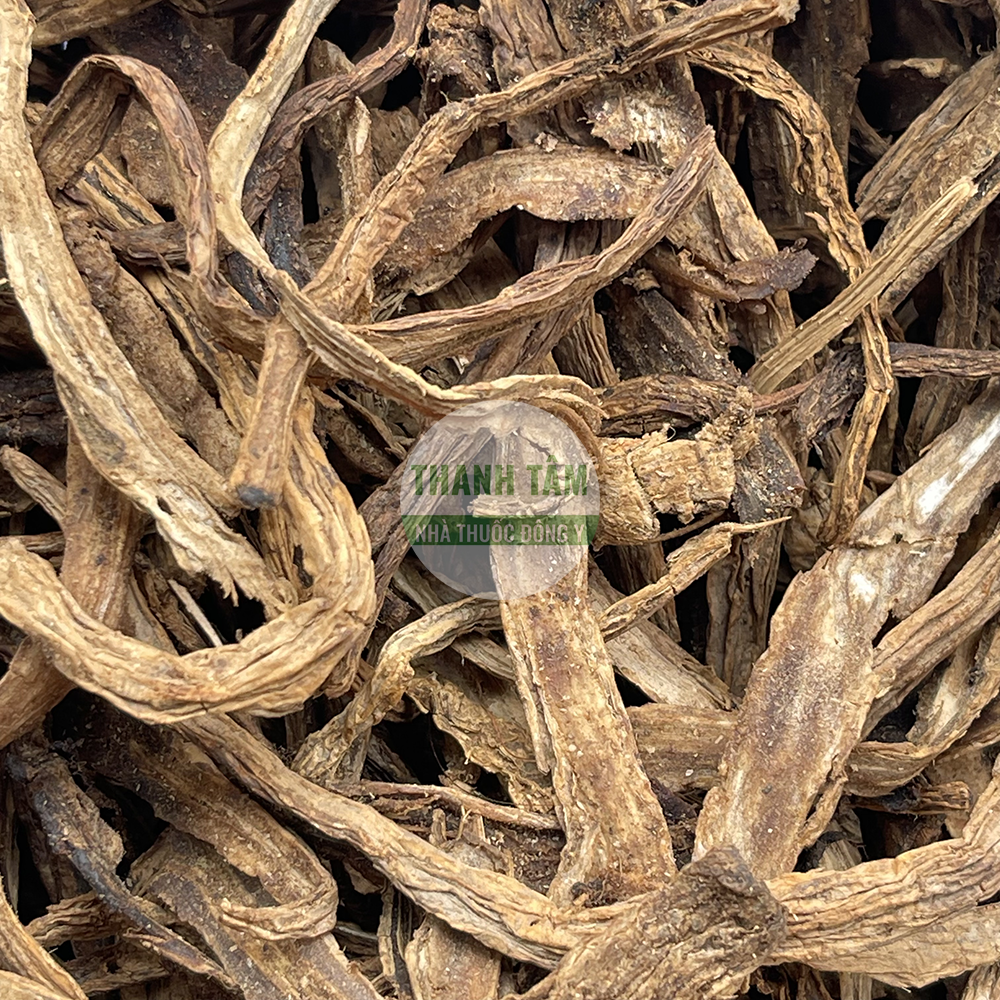
The medicinal roots grow in clusters from the base of the plant. After harvesting, they are washed and may be steamed or briefly dipped in boiling water before being dried. The finished herb is usually slightly curved and cylindrical, with a light yellow-brown outer surface marked by longitudinal wrinkles. The inner section is generally ivory to pale white.
Good-quality material should be dry, clean, free from mold or insects, and sourced from a reliable supplier with clear botanical identification.
2. Related names of Stemona Root
Other names: Bách bộ, Dây ba mươi, Củ 30, Đẹt ác, Củ rận trâu, Stemona Root, Tuberous Stemona Root.
Scientific name: Radix Stemonae tuberosae.
Pinyin name: Bai Bu.
Chinese name: 百部.
The Vietnamese name “Dây ba mươi” is linked to the many tuberous roots growing together in a cluster. In Chinese herbal literature, Bai Bu may refer to several Stemona species, while Vietnamese references commonly identify the medicinal material from Stemona tuberosa Lour. Buyers should verify the botanical source before use.
3. Flavors, Nature – Meridian
According to traditional herbal references, Stemona Root has Sweet and Bitter flavors with a slightly Warm nature. It is traditionally associated with the Lung Meridian.
In TCM theory, this combination is linked with moistening and warming the Lung while relieving cough, especially when symptoms are persistent or irritating. The Lung Meridian concept is a traditional framework and does not mean a proven organ-specific effect in modern medicine.
4. Benefits of Stemona Root in TCM
Common traditional uses include:
- Relieving cough: Frequently included in formulas for recent cough as well as cough that has continued for a longer period.
- Moistening the Lung: Traditionally considered when cough is persistent, the throat feels dry, or the airway is easily irritated.
- Warming the Lung: May be combined with other herbs when the overall pattern matches a Warm-supporting TCM approach.
- External cleansing: Traditionally used externally for lice, itching, scabies-like conditions, or certain external parasites.
These benefits belong to the TCM framework and do not replace diagnosis or medical treatment. Persistent cough may have causes such as infection, asthma, allergy, reflux, or other health conditions.
5. How to use and dosage
A common reference dosage is 8–12 g daily for oral use. The herb may be prepared as a decoction, concentrated extract, pill, or powder. The exact amount should be adjusted according to the herbal formula, individual constitution, and professional guidance.
The root may also be processed with honey and gently stir-fried. This traditional method is commonly chosen for formulas focused on moistening and cough support.
For external use, it may be boiled into a wash or prepared as a topical extract. Avoid the eyes, mucous membranes, and open wounds, and stop use if irritation develops.
6. Indications and contraindications
Indications
In TCM practice, Bai Bu may be referenced for recent cough, persistent cough, dry or irritating cough patterns, and certain external uses involving lice, itching, or parasites.
Contraindications and precautions
People with Spleen and Stomach Cold-deficiency patterns, abdominal coldness, loose stools, or diarrhea should avoid self-treatment. Pregnant or breastfeeding individuals, children, people with chronic illnesses, and those taking medication should consult a healthcare professional or Herb doctor before use.
Seek medical evaluation if cough is accompanied by shortness of breath, chest pain, high fever, coughing up blood, bluish lips, unexplained weight loss, or symptoms lasting for several weeks.
7. Reference herbal combinations with Bách bộ
- Persistent cough: May be combined with Gan Cao, Platycodon Root, or Chen Pi depending on the TCM pattern.
- Cough with throat dryness: May be paired with Mai Men Dong or other moistening herbs when appropriate.
- Cough with phlegm: May be combined with Chen Pi, Jie Geng, or other phlegm-transforming herbs according to pattern differentiation.
- Lung-supporting herbal extract: Some traditional formulas combine Stemona Root with Mai Men Dong, Chen Pi, Jie Geng, and Gan Cao.
These combinations are for reference only. Formula selection should consider constitution, symptoms, medications, and the underlying cause of cough.
8. Frequently asked questions
- Can Stemona Root be used for every type of cough? No. Cough caused by pneumonia, asthma, allergy, reflux, heart disease, or another medical condition requires appropriate evaluation and treatment.
- What is the usual daily dosage? A commonly referenced oral dosage is 8–12 g per day. The exact amount depends on preparation method and formula design.
- What is different about honey-processed Bai Bu? Honey-processing is a traditional method commonly used when the formula is intended to emphasize moistening and cough support.
- Can it be used externally for lice? Traditional practice includes external use for cleansing and parasite-related concerns. Avoid the eyes and mucous membranes, and discontinue use if irritation occurs.
- How should good-quality material be selected? Choose dry roots with a natural yellow-brown color, no mold, no insect damage, no unusual odor, and a clear source.
- Can it be used for a long time? Long-term self-use is not recommended. If cough keeps returning or does not improve, the underlying cause should be evaluated before continued herbal use.
👉 Visit Thanh Tam Herbs – a trusted Herbal pharmacy for quality herbs and TCM guidance
Nguồn tham khảo
- Dược điển Việt Nam.
- Lương y Hy Lãn Hoàng Văn Vinh, Cây thuốc vị thuốc Đông y, Nhà xuất bản Hà Nội, 2001.
- Tài liệu, hướng dẫn và thông tin chuyên ngành từ Bộ Y tế.
Rate this article
How useful was this article?
Tác giả bài viết