Poria with Pine Root | Traditional Herbal Medicines
🌿 Poria with Pine Root – A TCM Herb for Calming the Mind, Supporting the Spleen, and Promoting Urination
Poria with Pine Root, known in Vietnamese as Phục thần, is the portion of Poria fungal material that grows around or encloses a section of pine root. In TCM, it is used separately from ordinary Poria and is especially valued for calming the Heart and mind. It is commonly referenced for palpitations, poor sleep, restlessness, or weakness accompanied by reduced appetite.
- Scientific name / Pinyin / Chinese: Poria cum Radix Pini / Fu Shen / 茯神.
- Flavors, Nature – Meridian: Sweet, Bland, Neutral – associated with the Heart, Spleen, Lung, Kidney, and Stomach Meridians.
- Main benefits: Supports mental calmness, helps ease palpitations, supports sleep, strengthens the Spleen, and promotes the movement of retained fluids according to TCM theory.
- Reference dosage: 9–15 g daily, prepared as a decoction.
1. Origin and description
Poria with Pine Root comes from the fungus Poria cocos, a member of the Polyporaceae family. The fungus develops in association with pine wood and roots and forms a firm underground sclerotium. When the pale inner fungal tissue grows around or encloses a section of pine root, that portion is selected separately for medicinal use as Fu Shen.
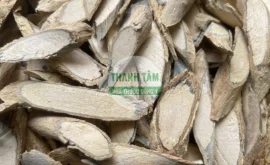
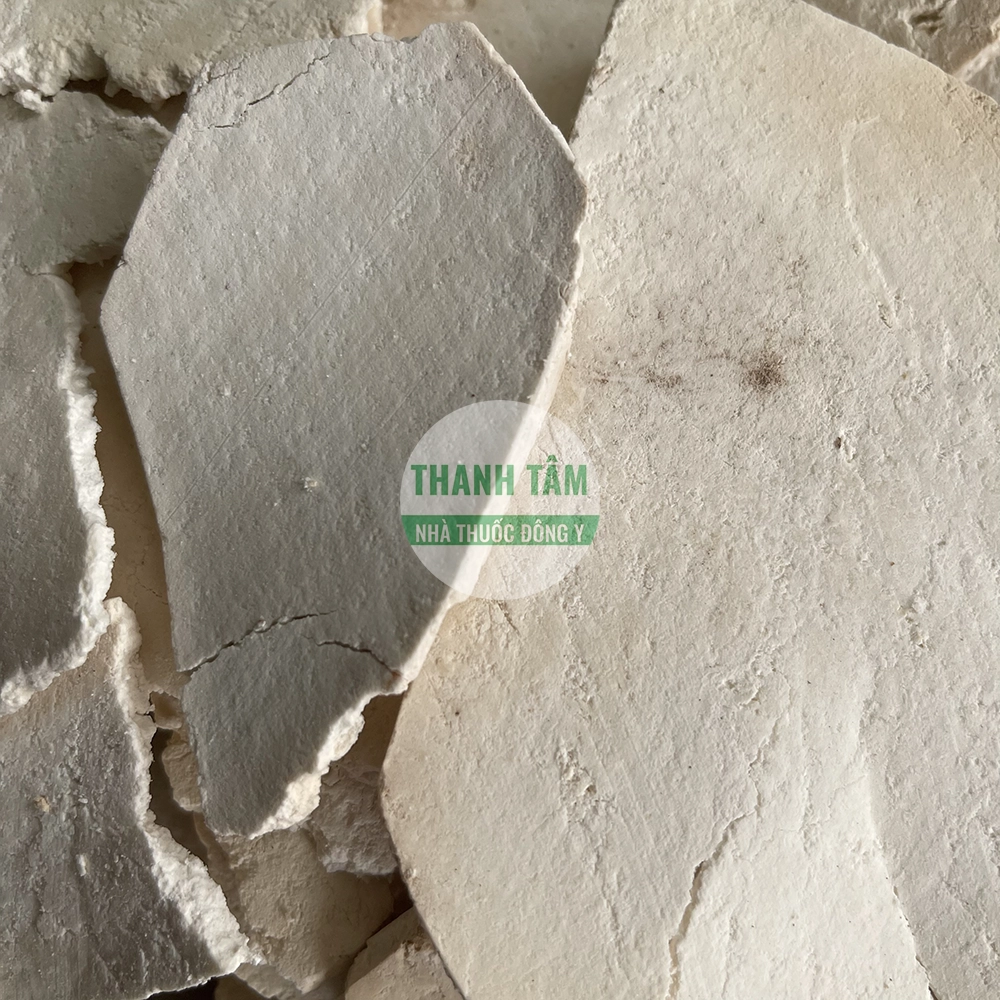
The material is usually cut into thick slices or pieces ranging from white to light brown. A yellow-brown section of pine root can often be seen in the center or along one side. The texture is firm, the odor is mild, and the taste is bland. The visible pine root is one of the most useful features for distinguishing this material from ordinary white Poria.
2. Related names of Poria with Pine Root
Other names: Phục thần, Phục thần mộc bao, Phục linh ôm rễ thông, Bạch phục linh phiến, Fu Shen, Poria with pine root.
Scientific name: Poria cum Radix Pini.
Pinyin name: Fu Shen.
Chinese name: 茯神.
Fu Shen and ordinary Fu Ling should not be considered completely identical. Both come from the same fungal source, but this material specifically contains pine root and is traditionally preferred when calming the Heart and settling the mind are important treatment goals.
3. Flavors, Nature – Meridian
According to Vietnamese TCM references, the herb is Sweet and Bland in flavor and Neutral in nature. It is associated with the Heart, Lung, Kidney, Spleen, and Stomach Meridians. Some modern Chinese herbal systems place greater emphasis on the Heart and Spleen Meridians.
The Bland quality is traditionally linked with leaching Dampness and promoting urination, while the Sweet flavor and Neutral nature support the Spleen in a gentle way. Compared with ordinary Poria, the pine-root-containing portion is particularly associated with calming mental restlessness and supporting emotional stability.
4. Benefits of Poria with Pine Root in TCM
- Calms the Heart and mind: Traditionally used when there is restlessness, palpitations, easy fright, or difficulty settling down.
- Supports sleep: May be combined with Heart-nourishing and calming herbs when poor sleep is related to an appropriate TCM pattern.
- Promotes urination and drains Dampness: Traditionally used to support the movement of retained fluids when urination is reduced or mild swelling is present.
- Supports the Spleen and middle burner: May be considered when poor appetite, digestive weakness, or loose stools are associated with Spleen deficiency.
- Supports people with palpitations: Frequently appears in formulas for palpitations accompanied by restlessness or sleep difficulty.
These benefits belong to TCM practice and do not replace medical treatment for insomnia, heart disease, edema, kidney disease, or psychiatric conditions.
5. How to use and dosage
A commonly referenced amount in Vietnam is 9–15 g per day. The herb is supplied as dried slices and decocted together with other ingredients in a TCM formula. The amount should not be increased without professional guidance.
Good-quality material should be dry and firm, with pale fungal tissue and a clearly visible section of pine root. Avoid products that are damp, moldy, discolored, insect-damaged, or have an unusual odor.
6. Indications and contraindications
Indications
In TCM, Poria with Pine Root may be referenced for insomnia, palpitations, a sensation of the Heart beating strongly, mental restlessness, or easy fright. It may also be included when Spleen deficiency is associated with poor appetite or loose stools, or when fluid retention is associated with reduced urination or mild swelling.
Contraindications and precautions
Long-term self-use is not recommended when the cause of insomnia or palpitations has not been identified. People taking diuretics, heart medication, sedative medication, or those with kidney disease should consult a doctor or Herb doctor before combining this herb with their treatment.
Persistent insomnia, palpitations with chest pain, shortness of breath, fainting, marked swelling, or rapidly worsening symptoms require medical assessment rather than herbal self-treatment.
7. Reference herbal combinations with Bạch phục linh phiến
- Insomnia and palpitations associated with Heart-Spleen deficiency: May be combined with Suan Zao Ren, Long Yan Rou, Yuan Zhi, Huang Qi, or Dang Shen according to the formula.
- Restlessness and easy fright: Commonly combined with Yuan Zhi, Shi Chang Pu, Long Gu, or other calming herbs according to the pattern.
- Poor appetite and loose stools due to Spleen deficiency: May be paired with Bai Zhu, Dang Shen, and Gan Cao.
- Fluid retention with reduced urination: May be combined with Ze Xie, Bai Zhu, or other herbs that promote urination when appropriate.
These combinations are for traditional reference only. Exact proportions and modifications should reflect constitution, symptoms, medications, and TCM pattern differentiation.
8. Frequently asked questions
- Is Poria with Pine Root the same as ordinary Poria? Not exactly. Both come from Wolfiporia cocos, but Fu Shen specifically contains a section of pine root and is traditionally emphasized more strongly for calming the mind.
- Why is there a piece of wood inside the herb? It is the pine root that became enclosed by the fungal material as it developed. This is a characteristic feature of Fu Shen.
- Can it be used every day for insomnia? Long-term self-use is not recommended. Insomnia has many possible causes and should be assessed if it occurs frequently or persists.
- Does Fu Shen make you sleepy immediately? It should not be understood as a fast-acting sleeping pill. In TCM, it is combined with other herbs according to the individual pattern.
- How do I choose good-quality material? Choose dry, firm pieces with a visible pine-root section, no mold or insect damage, no unusual odor, and clear sourcing from a reliable supplier.
👉 Visit Thanh Tam Herbs – a trusted Herbal pharmacy for quality herbs and TCM guidance
Nguồn tham khảo
- Dược điển Việt Nam.
- Lương y Hy Lãn Hoàng Văn Vinh, Cây thuốc vị thuốc Đông y, Nhà xuất bản Hà Nội, 2001.
- Tài liệu, hướng dẫn và thông tin chuyên ngành từ Bộ Y tế.
Rate this article
How useful was this article?
Tác giả bài viết