Drynaria Rhizome | Traditional Herbal Medicines
🌿 Drynaria Rhizome – A TCM Herb for Strengthening the Kidneys, Bones, and Tendons
Drynaria Rhizome, known as Cốt toái bổ in Vietnamese, is a traditional TCM herb widely used in formulas that support the Kidneys, strengthen bones and tendons, and assist recovery after musculoskeletal injuries. It has long been included in herbal approaches for lower back discomfort, weak bones, joint degeneration, and recovery after fractures when the TCM pattern is appropriate.

- Scientific name / Pinyin / Chinese: Drynaria fortunei / Gu Sui Bu / 骨碎补.
- Flavors, Nature – Meridian: Bitter, Warm – associated with the Liver and Kidney Meridians.
- Main benefits: Tonifies the Kidneys, strengthens bones and tendons, and traditionally supports recovery after bone injury.
- Reference dosage: Commonly 6–12 g daily as a decoction.
1. Origin and description
Drynaria Rhizome is the dried rhizome of Drynaria fortunei, a perennial fern in the Polypodiaceae family. The plant commonly grows attached to large trees or rocks in humid forest and mountain environments.
The creeping rhizomes are covered with yellow-brown scales, while the fronds grow in clusters.
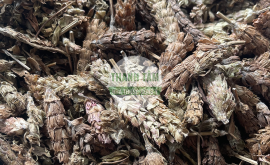
The rhizome is the medicinal part. After harvesting, it is cleaned, sliced, and dried. Good-quality material is usually thick, slightly curved, dark brown to yellow-brown, with fine scales on the outer surface. The broken surface is yellow-brown, with a mild aroma and slightly Bitter taste.
Before use, the dried rhizome may be sliced or processed according to the formula. Its traditional role is usually supportive rather than stand-alone, especially when bone or joint symptoms arise after injury, aging, or long-term weakness. Proper diagnosis remains important when pain persists or mobility worsens.
2. Related names of Drynaria Rhizome
Other names: Cốt toái bổ, Tổn thương bổ, Khỉ toái bổ, Thạch mao khương, Hầu khương, Drynaria Rhizome, Fortune’s Drynaria Rhizome.
Scientific name: Drynaria fortunei.
Pinyin name: Gu Sui Bu.
Chinese name: 骨碎补.
3. Flavors, Nature – Meridian
In TCM, this herb has a Bitter flavor and a Warm nature. It is traditionally associated with the Liver and Kidney Meridians.
In TCM theory, the Kidneys are said to govern the bones, while the Liver is associated with the tendons.
These traditional concepts help explain why Gu Sui Bu is frequently included in formulas for weak bones, lower back soreness, tendon weakness, or recovery after musculoskeletal injury. They should not be interpreted as direct modern medical mechanisms.
4. Benefits of Drynaria Rhizome in TCM
Common traditional uses include:
- Supporting the Kidneys and bones: Often included in formulas for weak bones, chronic lower back soreness, or reduced musculoskeletal strength.
- Strengthening tendons and supporting mobility: Traditionally used when the legs, back, or joints feel weak or stiff.
- Supporting fracture recovery: Classical use includes formulas intended to support bone healing after trauma once proper medical treatment and stabilization have been provided.
- Helping lower back and joint discomfort: May be combined with other herbs when chronic back or joint pain fits a Kidney-deficiency or trauma-related pattern.
- Supporting bone health in older adults: Traditionally considered when age-related weakness affects the lower back, knees, or bones.
Some modern studies have explored possible effects on bone formation and bone density, but these findings do not mean the herb can replace orthopedic care, fracture fixation, osteoporosis treatment, or rehabilitation.
5. How to use and dosage
A commonly referenced dosage is 6–12 g daily, usually prepared as a decoction. The herb may also appear in powders or compound formulas.
In traditional practice, it is frequently combined with other herbs that tonify the Kidneys, strengthen tendons and bones, or support circulation after injury. Some traditional preparations use herbal alcohol extracts, although these are not suitable for everyone.
The exact dose depends on the formula, constitution, age, medications, and treatment purpose. Long-term self-use is not recommended without professional guidance.
6. Indications and contraindications
Indications
Traditional references describe use for chronic lower back soreness, joint discomfort, weak tendons and bones, age-related musculoskeletal weakness, and recovery after bone injury.
Contraindications and precautions
People with Yin-deficiency and pronounced internal Heat signs should use caution. Pregnant individuals should consult a healthcare professional or Herb doctor before use.
A suspected fracture, severe injury, inability to bear weight, visible deformity, loss of sensation, or increasing swelling requires prompt medical evaluation. It should not replace imaging, immobilization, surgery, osteoporosis treatment, or rehabilitation when needed.
7. Reference herbal combinations with Cốt toái bổ
- Supporting the Kidneys and strengthening bones: Cốt toái bổ may be combined with Du Zhong and Niu Xi in traditional formulas for lower back and bone weakness.
- Lower back discomfort and spinal degeneration: Traditional combinations may include Xu Duan and Sang Ji Sheng when the overall pattern is appropriate.
- Recovery after bone injury: Classical trauma formulas may combine it with Zi Ran Tong and Xue Jie under professional supervision.
- Weak bones and tendons in older adults: It may be paired with Shu Di Huang and Gou Qi Zi to support Liver and Kidney deficiency patterns.
- Joint discomfort associated with Wind-Dampness: Some formulas combine it with Fang Feng and Du Huo according to the individual presentation.
These combinations are for reference only and should be adjusted to the individual.
8. Frequently asked questions
- Can Cốt toái bổ really help a broken bone heal? In TCM, it has long been used as a supportive herb during fracture recovery. However, fractures require proper diagnosis, alignment, stabilization, and follow-up care.
- Can older adults use it? It is traditionally used in formulas for age-related lower back, knee, and bone weakness, but older adults should consider medications, kidney function, and other medical conditions before use.
- Can it be prepared in herbal alcohol? Traditional preparations may use alcohol extraction, but this is not suitable for everyone, especially people with liver disease, certain medications, or those who should avoid alcohol.
- What is the usual daily dosage? A common reference range is 6–12 g daily as a decoction, although the actual amount depends on the formula and individual constitution.
- Can it be used for osteoporosis? It may be included in traditional supportive formulas, but osteoporosis requires proper assessment of bone density, fracture risk, nutrition, exercise, and medical treatment when indicated.
- How long can it be used? Duration should depend on the condition, constitution, response, and professional guidance rather than indefinite self-use.
👉 Visit Thanh Tam Herbs – a trusted Herbal pharmacy for quality herbs and TCM guidance
Nguồn tham khảo
- Dược điển Việt Nam.
- Lương y Hy Lãn Hoàng Văn Vinh, Cây thuốc vị thuốc Đông y, Nhà xuất bản Hà Nội, 2001.
- Tài liệu, hướng dẫn và thông tin chuyên ngành từ Bộ Y tế.
Rate this article
How useful was this article?
Tác giả bài viết