Chicken Blood Vine | Traditional Herbal Medicines
🌿 Chicken Blood Vine – A Blood-Nourishing Herb for Circulation, Menstrual Support and Meridians in TCM
Chicken Blood Vine, known as Ji Xue Teng in TCM, is a commonly used herb in formulas that nourish blood, move blood, regulate menstruation and ease soreness in the tendons, bones and joints. In TCM, this herb is valued because it both nourishes the blood and supports smoother qi and blood circulation. It is often selected for blood deficiency, blood stasis, body aches, numbness, tired limbs or irregular menstruation when the pattern is suitable.
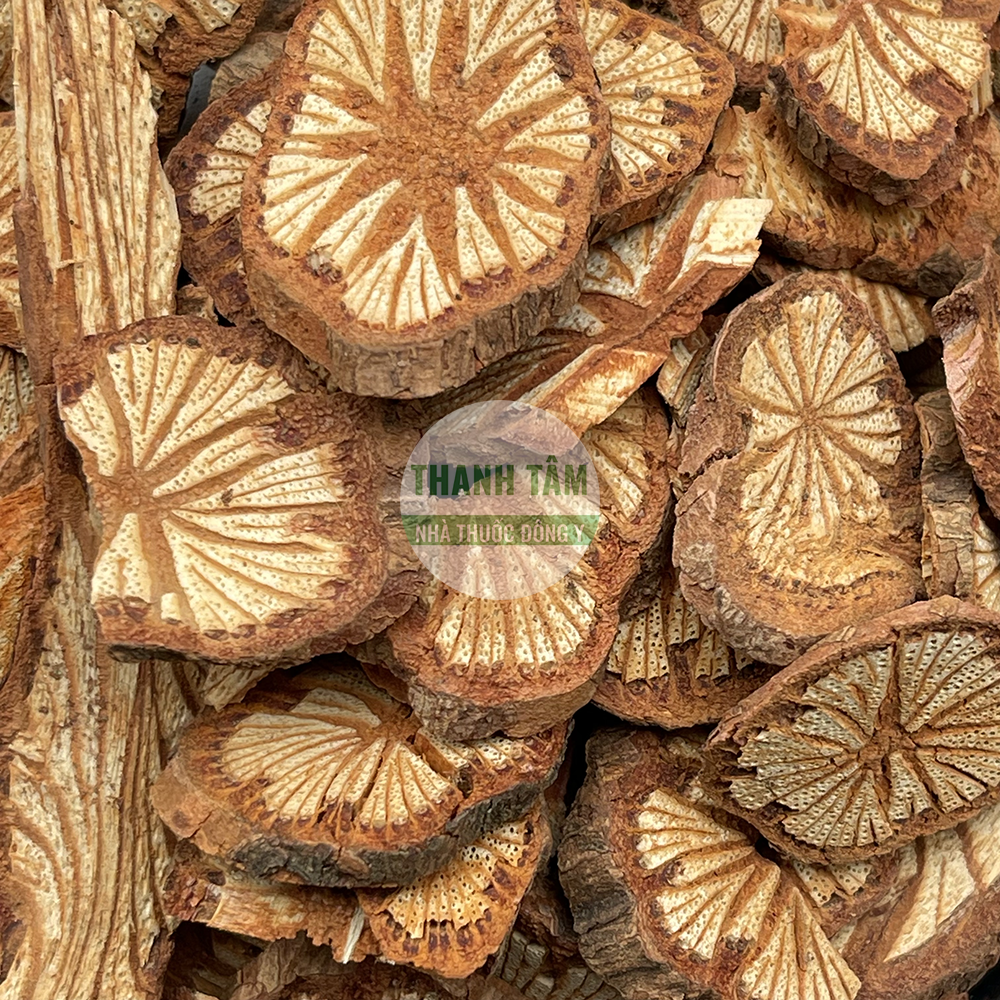
Chicken Blood Vine – a blood-nourishing and blood-moving herb
- Scientific name / Pinyin / Chinese: Caulis Spatholobi / Ji Xue Teng / 鸡血藤
- Natures, flavors and meridian entry: Bitter, slightly Sweet and Warm – Liver and Kidney meridians
- Main uses: Nourishes blood, moves blood, supports menstrual regulation, relaxes tendons, opens the meridians and helps with numbness, soreness or pain related to blood deficiency or blood stasis
- Suggested dosage: 9–15 g per day; up to 30 g when professionally indicated
1. Origin and description
Chicken Blood Vine is the sliced and dried woody stem of the Ji Xue Teng plant, commonly recorded in the Fabaceae family. It is a climbing woody vine that grows in mountain areas or open forests. The mature stem is firm, with a grayish-brown outer bark.
When the stem is cut across, the herb shows wood rings and a distinctive reddish-brown resin-like area. Dried slices are usually round or oval, with visible wood grain, a light odor, a slightly astringent taste, a Bitter flavor and a mildly Sweet aftertaste. Good quality slices are dry, firm, clearly reddish-brown and free from mold.
This herb can be confused with several other “blood vine” herbs, so correct identification and reliable sourcing are important.
2. Related names of Chicken Blood Vine
Chicken Blood Vine may also be called Hong Teng, Da Xue Teng, Dây máu gà or Cây cỏ máu in Vietnamese herbal usage.
Medicinal name: Caulis Spatholobi. Pinyin name: Ji Xue Teng. Chinese name: 鸡血藤.
Because folk names are not always consistent, buyers should check the source, appearance and identity of the herb carefully. At Thanh Tam Herbs, clear origin and proper selection help reduce confusion between similar-looking vines.
3. Natures, flavors and meridian entry
According to TCM, Chicken Blood Vine has a Bitter, slightly Sweet flavor and a Warm nature. The Bitter flavor helps move blood and clear stagnation. The Sweet quality supports nourishment, especially for the blood. The Warm nature helps activate circulation and support the movement of qi and blood.
This herb enters the Liver and Kidney meridians. The Liver is closely related to blood and tendons, while the Kidney is associated with bones, the lower back and knees. For this reason, Ji Xue Teng is often used in formulas for menstrual support, blood deficiency, tendon soreness, joint discomfort, lower back weakness or numbness in the limbs.
4. Benefits and traditional actions of Chicken Blood Vine in TCM
Chicken Blood Vine is both nourishing and moving. In simple terms, it is not only used to “nourish blood,” but also to help blood circulate more smoothly. Common traditional actions include:
- Nourishes blood: Used when blood deficiency may show as dull complexion, fatigue, dizziness, scanty menstruation or weakness.
- Moves blood: Helps support patterns of qi and blood stagnation that may cause dull, fixed or lingering pain.
- Regulates menstruation: Often used in suitable formulas for irregular periods, period pain, scanty flow or amenorrhea related to blood deficiency with stasis.
- Relaxes tendons and opens the meridians: Supports stiffness, joint soreness, lower back and knee discomfort, numbness or heaviness in the hands and feet.
This herb should not be treated as a general blood tonic for everyone. If anemia, prolonged bleeding, severe menstrual symptoms or long-term pain is present, the cause should be checked first.
5. How to use Ji Xue Teng and suggested dosage
Chicken Blood Vine is mainly used as a decoction. A common reference dosage is 9–15 g of dried herb per day, and some formulas may use 15–30 g under professional instruction.
- Decoction: Sliced herbs are boiled with other ingredients and divided into daily servings.
- Herbal wine: Sometimes used in folk practice for soreness and stiffness, but it is not suitable for people who should avoid alcohol.
- Concentrated extract, pills or powder: Used in selected formulas, but preparation should follow proper standards.
- Common combinations: Often paired with Dong Quai, Chuan Xiong, White Peony Root, Achyranthes Root or Eucommia Bark.
Do not use this herb long term without guidance, especially in cases of abnormal bleeding, anticoagulant use or upcoming surgery.
6. Indications and contraindications
Indications
In TCM, Chicken Blood Vine is commonly used for blood deficiency, blood stasis, irregular menstruation, period pain due to blood stasis, scanty menstruation, amenorrhea, tendon and bone soreness, lower back and knee pain, and numbness of the hands or feet.
Contraindications
Pregnant women should not use this herb on their own. People with heavy uterine bleeding, bleeding of unclear cause, clotting disorders, anticoagulant use or serious chronic disease should consult a qualified Herb doctor. People with obvious heat signs, constipation, dry mouth, thirst or acute inflammation should also use caution.
7. Reference herbal combinations with Kê huyết đằng
- Scanty menstruation with blood deficiency: Ji Xue Teng + Dong Quai + White Peony Root + Prepared Rehmannia.
- Menstrual pain due to blood stasis: Ji Xue Teng + Chuan Xiong + Cyperus Rhizome + Motherwort.
- Joint soreness, numbness and cold-damp obstruction: Ji Xue Teng + Piper kadsura vine + Cinnamon Twig.
- Lower back and knee weakness: Ji Xue Teng + Achyranthes Root + Eucommia Bark + Taxillus Twig.
- Wind-damp pain: Ji Xue Teng + Qin Jiao + Siler Root + Clematis Root.
These combinations are for reference only and should not replace a prescription from a Herb doctor.
8. Frequently asked questions
- Is Chicken Blood Vine a blood tonic?
In TCM, it can nourish blood, but it should not be used to replace proper evaluation or treatment for anemia. - Can Ji Xue Teng support menstrual regulation?
It may be used in formulas for scanty periods, pain due to blood stasis or blood deficiency with stagnation, when the pattern is suitable. - Can people with joint pain use this herb?
It may be included in formulas that relax tendons and open the meridians, but the cause of pain should be identified first. - Should it be taken every day?
Daily long-term use is not recommended without guidance because this herb moves blood and must match the body pattern.
👉 Thanh Tam Herbs – A trusted Herbal pharmacy for quality TCM herbs in Cho Lon
Nguồn tham khảo
- Dược điển Việt Nam.
- Lương y Hy Lãn Hoàng Văn Vinh, Cây thuốc vị thuốc Đông y, Nhà xuất bản Hà Nội, 2001.
- Tài liệu, hướng dẫn và thông tin chuyên ngành từ Bộ Y tế.
Rate this article
How useful was this article?
Tác giả bài viết