Evodia Fruit | Traditional Herbal Medicines
🌿 Evodia Fruit – A TCM Herb for Warming the Middle, Dispelling Cold, and Relieving Pain
Evodia Fruit, known as Ngô thù du in Vietnamese, is the dried nearly ripe fruit of Evodia rutaecarpa (Juss.) Benth. In TCM, it is traditionally used in formulas for abdominal pain caused by Cold, vomiting, acid regurgitation, early-morning diarrhea, and certain headache patterns associated with Cold.
- Scientific name / Pinyin / Chinese: Fructus Evodiae rutaecarpae / Wu Zhu Yu / 吴茱萸.
- Flavors, Nature – Meridian: Pungent, Bitter; Warm and slightly toxic – associated with the Spleen, Stomach, Liver, and Kidney Meridians.
- Main benefits: Traditionally used to warm the digestive system, dispel Cold, relieve pain, and support nausea, vomiting, and acid regurgitation.
- Reference dosage: Commonly 1.5–4.5 g daily, usually combined with other herbs; external use in an appropriate amount.
1. Origin and description
Evodia Fruit comes from Evodia rutaecarpa (Juss.) Benth., a small perennial tree or shrub in the Rutaceae family. The leaves grow opposite each other and are pinnately compound, with visible oil glands containing aromatic compounds. The flowers are small and usually yellowish white.
The medicinal part is the nearly ripe fruit, harvested before the fruit splits open. After collection, it is dried naturally or at a low temperature, and stems, leaves, and other impurities are removed.
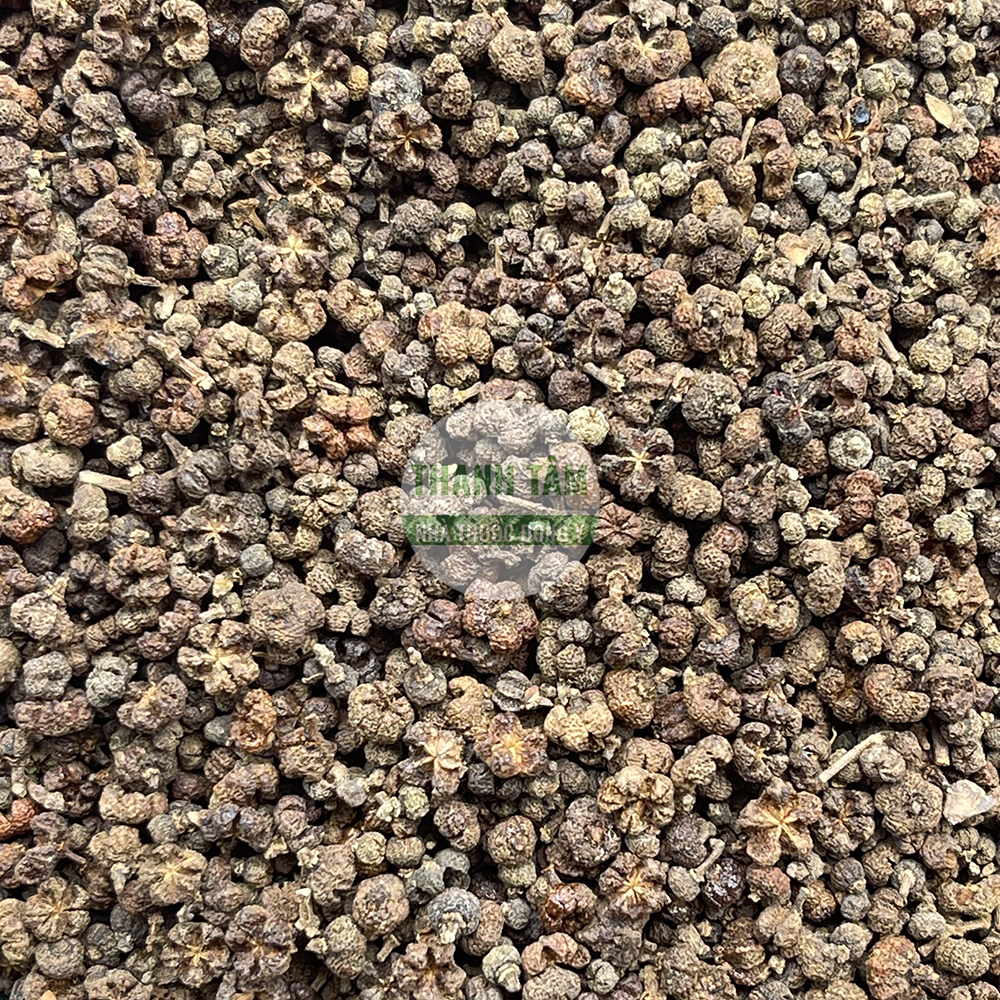
The dried fruits are round or slightly flattened. Their outer surface ranges from dark yellow-green to brown and is rough, with numerous visible oil-gland dots. The herb has a distinctive aromatic odor and a strongly Pungent, Bitter taste.
Good-quality material should be dry, aromatic, free from mold, low in foreign matter, and obtained from a clearly identified botanical source.
2. Related names of Evodia Fruit
Other names: Ngô thù du, Ngô thù, Ngô vu, Thù du, Evodia Fruit, Evodia Berry.
Scientific name: Fructus Evodiae rutaecarpae.
Pinyin name: Wu Zhu Yu.
Chinese name: 吴茱萸.
In modern botanical classification, this species may also appear under the name Tetradium ruticarpum. It should not be confused with Shan Zhu Yu, or Cornus Fruit, because the two herbs come from different plants and have different traditional functions.
3. Flavors, Nature – Meridian
In TCM, Evodia Fruit is described as having Pungent and Bitter flavors with a Warm nature and slight toxicity. It is traditionally associated with the Spleen, Stomach, Liver, and Kidney Meridians.
Its Pungent and Warm characteristics are linked with dispersing Cold, warming the Middle Burner, and relieving pain related to Cold patterns. It is also traditionally used to redirect rebellious Qi downward when nausea or vomiting is present.
“Cold” in TCM is a traditional pattern concept that may include sensations of coldness, abdominal discomfort, loose stools, or pain relieved by warmth. It is not equivalent to a specific diagnosis in modern medicine.
4. Benefits of Evodia Fruit in TCM
- Warming the Middle and dispelling Cold: Traditionally used when abdominal pain, bloating, or epigastric discomfort is associated with a Cold pattern.
- Relieving pain: May be included in formulas for certain headaches, abdominal pain, or Cold-related lower abdominal discomfort.
- Redirecting rebellious Qi downward: Traditionally used for nausea, dry heaving, or vomiting accompanied by abdominal coldness.
- Supporting acid regurgitation: May be combined with other herbs when sour regurgitation and epigastric discomfort fit the appropriate TCM pattern.
- Supporting Cold-type diarrhea: Appears in traditional formulas for early-morning diarrhea, sometimes called fifth-watch diarrhea.
These uses belong to the TCM framework and should not replace medical diagnosis or treatment.
5. How to use and dosage
A commonly referenced oral dosage is 1.5–4.5 g daily, usually combined with other herbs in a formula. Because the herb is considered strongly warming and slightly toxic, high doses and prolonged self-use are not recommended.
One traditional processing method involves preparing the herb with Gan Cao. The fruits are mixed with a licorice decoction, allowed to absorb the liquid, then gently stir-fried and dried. This process is traditionally used to modify the herb before inclusion in formulas.
Evodia Fruit may also be used externally in selected traditional applications. The amount and preparation method should follow professional guidance.
6. Indications and contraindications
Indications
In TCM practice, the herb may be referenced for Jueyin-type headache, Cold-related abdominal pain, Cold-Dampness patterns, leg discomfort traditionally described as beriberi-type swelling, epigastric pain with vomiting or acid regurgitation, and early-morning diarrhea.
Contraindications and precautions
Evodia Fruit should not be used for prolonged periods and is generally avoided in people with Yin deficiency and internal Heat. People with obvious Heat signs or symptoms that do not fit a Cold pattern should use caution.
Pregnant or breastfeeding individuals, children, people with chronic health conditions, and those taking medication should consult a healthcare professional or Herb doctor before use.
Seek medical attention if abdominal pain is severe, vomiting is persistent, vomit contains blood, stools are black, fever is high, or signs of dehydration develop.
7. Reference herbal combinations with Ngô thù du
- Vomiting with a sensation of Cold: The classical Wu Zhu Yu Tang combines this herb with Ren Shen, Sheng Jiang, and Da Zao.
- Acid regurgitation and epigastric pain: The classical Zuo Jin Wan combines Huang Lian with this herb in a specific traditional ratio.
- Early-morning diarrhea: It may appear in formulas designed to warm the Kidney and stabilize the intestines for fifth-watch diarrhea.
- Abdominal pain caused by Cold: May be combined with Gan Jiang, Mu Xiang, or other warming and Qi-regulating herbs depending on the presentation.
These combinations are for traditional reference only. Formula ingredients and dosages should be adjusted according to constitution and symptoms.
8. Frequently asked questions
- Can Evodia Fruit be used for every type of abdominal pain? No. In TCM, it is mainly considered when symptoms fit a Cold pattern. Abdominal pain can have many different causes and may require medical evaluation.
- What is the usual daily dosage? A commonly referenced dosage is 1.5–4.5 g per day, typically used as part of a herbal formula.
- Can it be taken long term for digestive support? Long-term unsupervised use is not recommended. The herb is strongly warming and slightly toxic, so it should not be consumed casually as an everyday tea.
- Are Evodia Fruit and Shan Zhu Yu the same herb? No. They come from different plant species and have different Flavors, Natures, Meridians, and traditional applications.
- How should good-quality material be selected? Choose dry fruits with a natural color, characteristic aroma, no mold, minimal impurities, and a clearly identified source.
👉 Visit Thanh Tam Herbs – a trusted Herbal pharmacy for quality herbs and TCM guidance
Nguồn tham khảo
- Dược điển Việt Nam.
- Lương y Hy Lãn Hoàng Văn Vinh, Cây thuốc vị thuốc Đông y, Nhà xuất bản Hà Nội, 2001.
- Tài liệu, hướng dẫn và thông tin chuyên ngành từ Bộ Y tế.
Rate this article
How useful was this article?
Tác giả bài viết