Jiaogulan | Traditional Herbal Medicines
🌿 Jiaogulan – A TCM Herb for Clearing Heat, Supporting Cardiovascular Health, and Promoting Overall Vitality
Jiaogulan, known in Vietnamese as Giảo cổ lam, is a familiar herb in TCM and Vietnamese folk medicine. It is often nicknamed “poor man’s ginseng” because it has traditionally been used as a general tonic to support vitality, circulation, cardiovascular wellness, and resistance to fatigue. With a mildly Bitter taste, a slightly Sweet aftertaste, and a Cool nature, it is also commonly prepared as an herbal tea for long-term wellness support.

- Scientific name / Pinyin / Chinese: Gynostemma pentaphyllum / Jiao Gu Lan / 绞股蓝.
- Flavors, Nature – Meridian: Bitter, slightly Sweet, Cool – associated with the Liver, Heart, and Lung Meridians.
- Main benefits: Clears Heat, supports cardiovascular wellness, may help maintain healthy blood lipid balance, and supports energy and resilience according to TCM and traditional use.
- Reference dosage: Commonly 20–40 g of dried herb daily, prepared as a decoction or herbal tea.
1. Origin and description
Jiaogulan is the dried whole herb of Gynostemma pentaphyllum, a climbing plant in the Cucurbitaceae family. It grows naturally and is also cultivated in cool, highland regions of Vietnam such as Hoa Binh, Lao Cai, Ha Giang, and Cao Bang. Outside Vietnam, the plant is also found in China, Japan, and other parts of Asia.
The plant has slender climbing stems with tendrils and palmately compound leaves, often with five leaflets. This explains the Vietnamese name “Ngũ diệp sâm,” meaning five-leaf ginseng.
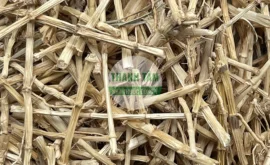
The stems and leaves are commonly harvested and dried. Good-quality material has a natural dark green color, a mild aroma, and a Bitter first taste followed by a Sweet aftertaste.
2. Related names of Jiaogulan
Other names: Giảo cổ lam, Ngũ diệp sâm, Cổ yếm, Thất diệp đởm, Thiên đường thảo, Phúc âm thảo, five-leaf ginseng, southern ginseng, immortality herb.
Scientific name: Gynostemma pentaphyllum.
Pinyin name: Jiao Gu Lan.
Chinese name: 绞股蓝.
The nickname “southern ginseng” or “five-leaf ginseng” does not mean that this plant is true ginseng. It belongs to a different botanical family and should not be considered interchangeable with Panax ginseng.
3. Flavors, Nature – Meridian
In TCM and Vietnamese traditional herbal practice, the herb is described as Bitter with a slightly Sweet aftertaste and a Cool nature. It is commonly associated with the Liver, Heart, and Lung Meridians.
Its Bitter and Cool qualities are traditionally linked with clearing Heat, while the Sweet aspect is associated with gentle support. Through the Liver, Heart, and Lung Meridians, it is traditionally used for internal Heat, circulation, general vitality, and respiratory comfort.
4. Benefits of Jiaogulan in TCM
In traditional use, the herb is considered both Heat-clearing and gently supportive. Commonly referenced benefits include:
- Clearing Heat: Traditionally used for people who experience internal warmth, thirst, or a tendency to feel overheated.
- Supporting cardiovascular wellness: Often used as part of a routine aimed at maintaining healthy circulation and cardiovascular function.
- Supporting healthy blood lipid balance: Commonly used as part of lifestyle support for people concerned about lipid levels.
- Supporting energy and resilience: May be used for fatigue, reduced stamina, or general weakness.
- Supporting relaxation: Some people use the herb as a mild calming tea, particularly when fatigue and tension occur together.
Research has studied gypenosides, flavonoids, and antioxidant compounds in Gynostemma pentaphyllum, but the herb should not replace prescribed treatment for cardiovascular or metabolic disease.
5. How to use and dosage
Jiaogulan is most commonly prepared as an herbal tea or decoction. A reference amount is 20–40 g of dried herb per day.
- Herbal tea: Use about 20–30 g of dried leaves and stems, steep in hot water, and drink during the day.
- Decoction: Use about 30–40 g with approximately 1–1.5 liters of water and divide into several servings.
- Herbal combinations: It may be combined with other herbs depending on the intended TCM pattern and wellness goal.
It is generally better to drink the tea during the daytime and avoid large amounts late in the evening if it increases alertness.
6. Indications and contraindications
Indications
In traditional practice, Jiaogulan may be considered for fatigue, reduced stamina, internal Heat, or general cardiovascular and metabolic wellness support.
Contraindications and precautions
People with very low blood pressure should use the herb cautiously. Pregnant or breastfeeding people should seek professional advice before medicinal use.
Anyone taking medication for blood pressure, blood sugar, blood clotting, or cardiovascular conditions should consult a doctor or Herb doctor before regular use.
Beginners may start with a lower amount. Stop use if dizziness, digestive upset, unusual weakness, or other unexpected symptoms occur.
7. Reference herbal combinations with Giảo cổ lam
- Cardiovascular wellness and blood pressure support: May be combined with Huai Hua when appropriate to the individual pattern.
- Clearing Heat and supporting the Liver: May be combined with artichoke in wellness tea blends.
- Supporting energy and resilience: May be paired with Ling Zhi in formulas intended to support general vitality.
- Relaxation and sleep support: May be combined with Lạc tiên in traditional herbal tea preparations.
These combinations are for traditional reference only and should be adjusted according to constitution, symptoms, medications, and TCM pattern differentiation.
8. Frequently asked questions
- Can I drink Jiaogulan every day? It is commonly consumed as an herbal tea, but long-term daily use should still be individualized. People taking medication or managing chronic conditions should seek professional advice.
- How long does it take to notice an effect? There is no fixed timeframe. Any effect depends on the individual, preparation, dose, diet, and overall health.
- Can it cause insomnia? Some people report feeling more alert after drinking it, especially in larger amounts. If this occurs, use it earlier in the day and avoid late-evening intake.
- Is it the same as ginseng? No. Although the herb contains saponins and is sometimes nicknamed southern ginseng, it is botanically different from true ginseng.
- How should I choose good-quality material? Choose naturally green dried leaves and stems with a mild herbal aroma, minimal foreign matter, no mold, and clear sourcing from a reliable Herbal pharmacy.
👉 Visit Thanh Tam Herbs – a trusted Herbal pharmacy for quality herbs and TCM guidance
Nguồn tham khảo
- Dược điển Việt Nam.
- Lương y Hy Lãn Hoàng Văn Vinh, Cây thuốc vị thuốc Đông y, Nhà xuất bản Hà Nội, 2001.
- Tài liệu, hướng dẫn và thông tin chuyên ngành từ Bộ Y tế.
Rate this article
How useful was this article?
Tác giả bài viết