Southern Pinellia | Traditional Herbal Medicines
🌿 Southern Pinellia – A TCM herb for transforming phlegm, directing rebellious qi downward, and supporting cough relief
Southern Pinellia, also called raw bán hạ in Vietnamese folk use, is a herb commonly used in TCM formulas to transform phlegm, relieve cough with phlegm, direct rebellious qi downward, and support nausea. However, the raw herb can be irritating and toxic, so it should be properly processed before any internal use.
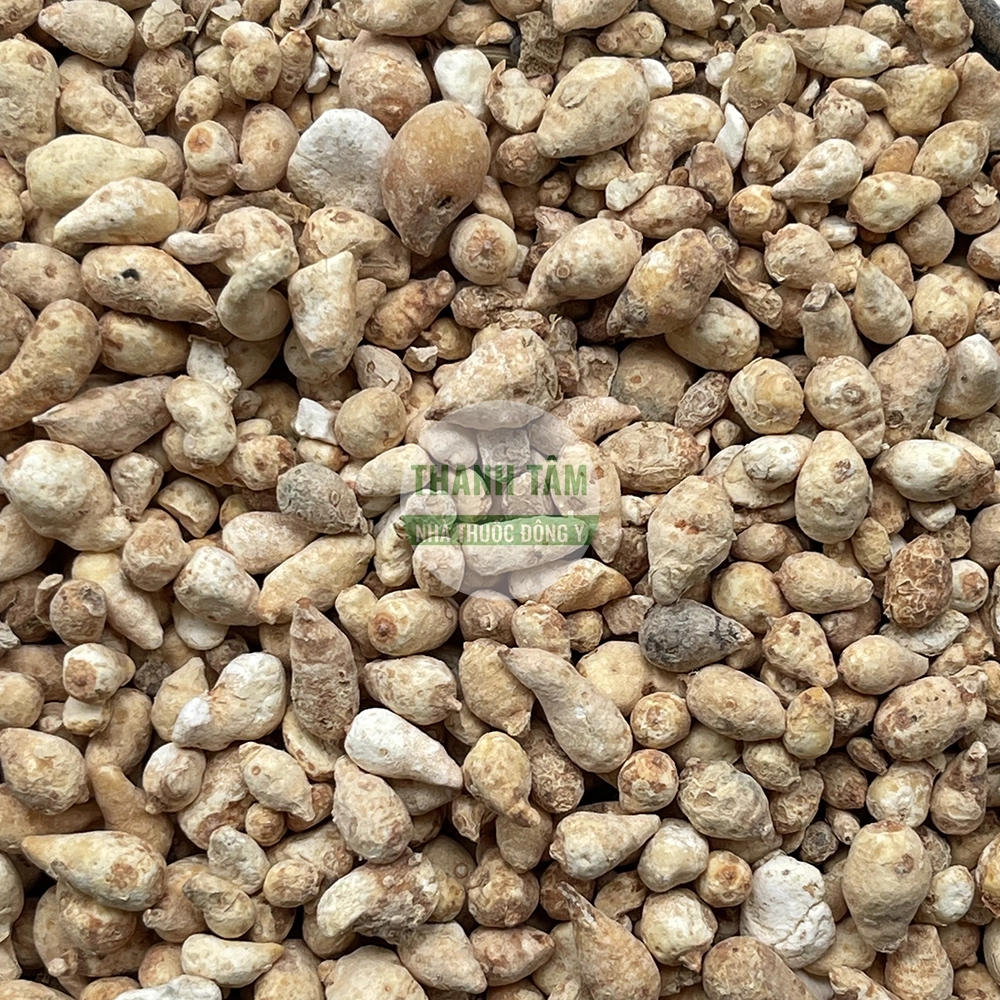
Southern Pinellia – TCM herb for transforming phlegm and directing rebellious qi downward
- Scientific name / Pinyin / Chinese: Rhizoma Typhonii trilobati / Ma Ti Li Tou Jian / 马蹄犁头尖
- Flavors, Nature – Meridian: Pungent, Warm Nature, toxic when unprocessed – commonly enters the Spleen, Stomach, and Lung Meridians
- Main benefits: Helps transform phlegm, support cough relief when phlegm is present, ease nausea, reduce fullness caused by phlegm-dampness, and support vomiting patterns when used correctly.
- Reference dosage: 4–8 g/day for properly processed herb; do not self-use the raw form.
1. Origin and description
Southern Pinellia is the harvested, cleaned, and processed rhizome or tuber of the three-lobed bán hạ plant, belonging to the arum family (Araceae). The plant often grows in moist places, garden edges, forest margins, abandoned fields, or loose soil.
It is a small herbaceous plant with an underground rhizome. The leaves are usually lobed, with long stalks, and the leaf shape may change as the plant grows. Its flower structure is a spathe, which is typical of the arum family. The medicinal part is the tuber or rhizome, which must be cleaned and processed after harvesting to reduce toxicity and irritation.
After proper processing, the dried material is usually seen as slices or small pieces. It is ivory white to pale yellow, firm in texture, mildly aromatic, and has a Pungent, tingling taste. Good quality material should be evenly dried, free from mold, insects, and unusual odor.
2. Related names of Southern Pinellia
Other names: Bán hạ sống, Bán hạ ba thùy, Củ chóc, Chóc chuột, Lá ba chìa.
Scientific herbal name: Rhizoma Typhonii trilobati. Pinyin name: Ma Ti Li Tou Jian. Chinese name: 马蹄犁头尖.
This herb should be distinguished from Bán hạ bắc, which is commonly associated with Pinellia ternata. Although the Vietnamese names sound similar, the two herbs should not be substituted for each other without professional guidance.
3. Flavors, Nature – Meridian
In TCM, Southern Pinellia has a Pungent flavor, a Warm Nature, and is considered toxic when used raw. The Pungent flavor helps disperse clumping and open obstruction. The Warm Nature helps transform cold phlegm and reduce phlegm-dampness accumulating in the Lung, Spleen, and Stomach systems.
The herb commonly enters the Spleen, Stomach, and Lung Meridians. The Spleen is related to fluid transformation and dampness. The Stomach is related to nausea and vomiting. The Lung is related to cough, phlegm, and breathing. For this reason, this herb often appears in formulas for phlegmy cough, vomiting, chest or abdominal fullness, and digestive discomfort caused by phlegm-dampness.
4. Benefits of Southern Pinellia in TCM
Southern Pinellia is mainly known for drying dampness, transforming phlegm, directing rebellious qi downward, stopping vomiting, and dispersing clumping. In simple words, it helps reduce thick or excessive phlegm, supports the body in moving phlegm out, helps relieve cough with phlegm, and calms nausea related to phlegm-dampness or Stomach qi moving upward.
In traditional formulas, it is commonly used for cough with much phlegm, thin white phlegm, asthma with phlegm, nausea, vomiting, fullness in the upper abdomen, and a sensation of something stuck in the throat due to phlegm obstruction. Some folk experience also uses the raw herb externally for swelling or painful lumps, but caution is necessary because the raw material may cause burning, redness, or skin irritation.
5. How to use and dosage
Southern Pinellia should be used internally only after proper processing. A common reference dosage is 4–8 g/day, usually decocted with other herbs. The raw form should not be swallowed, chewed, or held in the mouth because it may cause strong tingling, throat irritation, nausea, and digestive discomfort.
- Decoction: Use only processed material, boil with the herbal formula, and divide into servings during the day.
- Processing: Traditional processing may involve soaking, washing, and treating with ginger, alum, or other professional methods to reduce toxicity and irritation.
- External use: Use only with guidance. Avoid applying to open wounds, sensitive skin, or irritated areas.
- Combination: Often used with Chen Pi, Fu Ling, Gan Cao, Sheng Jiang, Su Zi, Xing Ren, or Bai Zhu.
Do not increase the dose, use it long term, or combine it randomly with cough medicine, anti-nausea medicine, or medication for chronic disease.
6. Indications and contraindications
Indications
This herb is traditionally used for cough with phlegm, phlegm-dampness, asthma with much phlegm, nausea, vomiting, upper abdominal fullness, poor digestion, a stuck sensation in the throat caused by phlegm obstruction, and certain phlegm clumping patterns in TCM theory.
Contraindications
Do not use raw Southern Pinellia internally. People with yin deficiency and dryness heat, dry cough with little phlegm, coughing blood, dry sore throat, mouth or throat ulcers, pregnancy, young children, liver or kidney disease, or those taking multiple Western medicines should ask a Herb doctor or healthcare professional before use. If strong throat burning, repeated vomiting, breathing difficulty, or allergic signs occur, stop using it and seek medical help.
7. Reference herbal combinations with Bán hạ nam
- Cough with much phlegm and thin white sputum: processed Southern Pinellia + Chen Pi + Fu Ling + Gan Cao.
- Nausea and vomiting due to phlegm-dampness: processed Southern Pinellia + Sheng Jiang + Chen Pi.
- Asthma with much phlegm: processed Southern Pinellia + Su Zi + Xing Ren + Chen Pi.
- Fullness and poor digestion: processed Southern Pinellia + Bai Zhu + Fu Ling + Sha Ren.
These combinations are for reference only and do not replace a prescription from a Herb doctor.
8. Frequently asked questions
- Is Southern Pinellia the same as bán hạ sống?
In some folk usage, it may be called that way. However, “sống” means raw or unprocessed, and this form should not be self-used internally. - Why must it be processed before use?
Because the raw herb is toxic and can strongly irritate the mouth, throat, and digestive tract. Processing helps reduce toxicity and makes it more suitable for formulas. - Is this herb suitable for dry cough?
Not for every type of cough. It is mainly used for cough with phlegm and phlegm-dampness. Dry cough or dry sore throat requires caution. - How can good material be recognized?
Choose properly processed, clean, well-dried material with no mold, no insects, no unusual odor, and a clear source.
👉 Thanh Tam Herbs – Trusted Herbal pharmacy for authentic TCM herbs
Nguồn tham khảo
- Dược điển Việt Nam.
- Lương y Hy Lãn Hoàng Văn Vinh, Cây thuốc vị thuốc Đông y, Nhà xuất bản Hà Nội, 2001.
- Tài liệu, hướng dẫn và thông tin chuyên ngành từ Bộ Y tế.
Rate this article
How useful was this article?
Tác giả bài viết