Rose Buds | Traditional Herbal Medicines
🌿 Rose Buds – A TCM Herb for Regulating Qi, Relieving Constraint, and Harmonizing Blood
Rose buds are the dried flower buds of the rugosa rose, collected shortly before they open. In TCM, this aromatic herb is traditionally used to regulate Qi, ease emotional constraint, reduce fullness in the chest and abdomen, and support the smooth movement of blood.
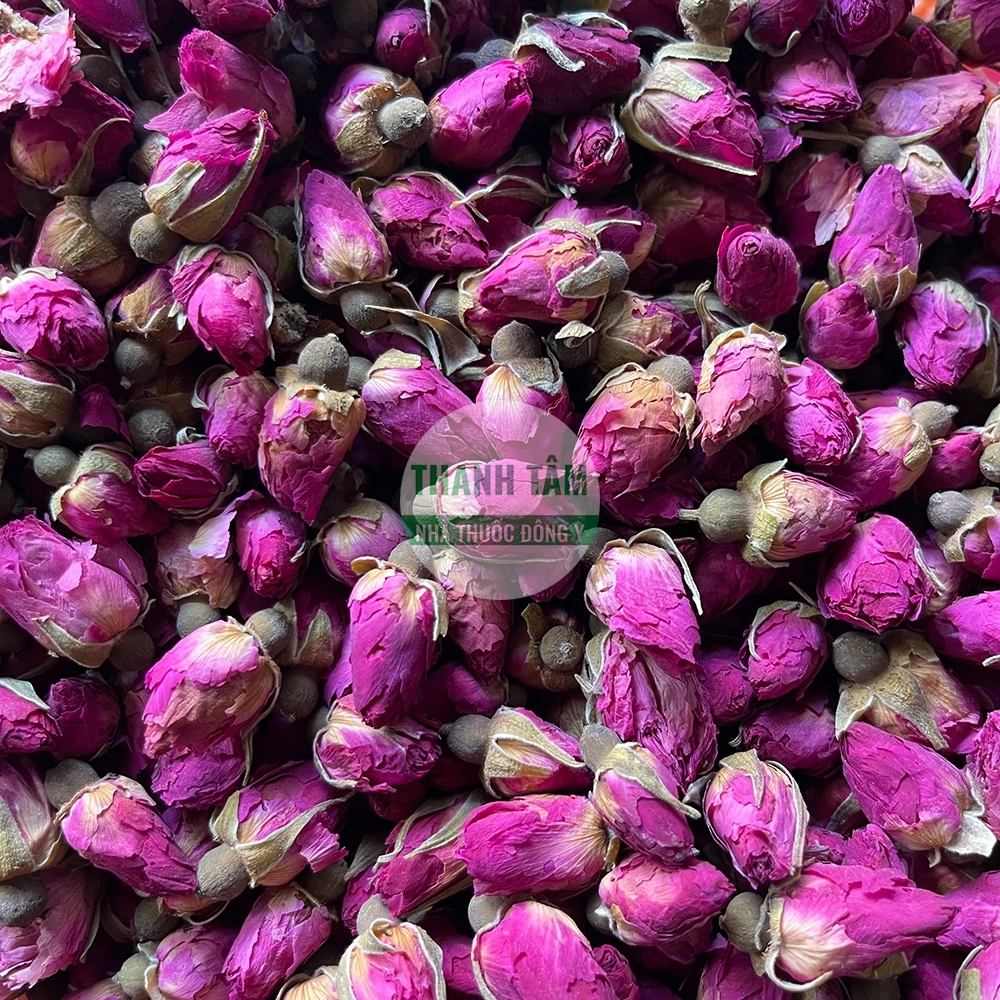
Rose buds used as a traditional herbal medicine
- Scientific name / Pinyin / Chinese: Rosae Rugosae Flos / Mei Gui Hua / 玫瑰花
- Flavors, Nature – Meridian: Sweet and slightly Bitter, Warm – enters the Liver and Spleen meridians
- Main benefits: Traditionally used to promote the smooth movement of Qi, relieve emotional constraint, reduce chest and abdominal fullness, harmonize blood, and ease mild discomfort.
- Reference dosage: 3–6 g of dried herb daily, prepared as a decoction or infusion under professional guidance.
1. Origin and description
The medicinal material usually consists of dried flower buds from Rosa rugosa Thunb., a thorny shrub in the Rosaceae family with fragrant pink-purple or reddish-purple flowers.
The buds are collected shortly before blooming and dried in the shade or at low heat. Good material remains relatively intact, naturally fragrant, clean, and dry. Do not use moldy, damp, artificially perfumed, roadside, or decorative flowers.
2. Related names of Rose Buds
Other names: Rugosa rose buds, dried rose buds, Chinese rose buds, Mei Gui Hua, Nụ hồng, Mai khôi hoa, Mân côi hoa, and Hồng mai khôi.
Scientific name: Rosae Rugosae Flos.
Pinyin name: Mei Gui Hua.
Chinese name: 玫瑰花.
The word “rose” covers many species and cultivars. In TCM, Mei Gui Hua mainly refers to dried Rosa rugosa buds, not every ornamental rose. It also differs from Yue Ji Hua, Cherokee rose fruit, and rosehips.
3. Flavors, Nature – Meridian
According to TCM, the herb has a Sweet and slightly Bitter flavor, a Warm nature, and enters the Liver and Spleen meridians. Its traditional actions include moving Qi, relieving constraint, harmonizing blood, and easing pain.
In simple terms, “moving Qi and relieving constraint” refers to discomfort such as chest tightness, abdominal fullness, frequent sighing, or reduced appetite that worsens with stress. “Harmonizing blood” describes use when Qi stagnation affects circulation. A single symptom is not enough to identify the correct pattern.
4. Benefits of Rose Buds in TCM
- Relieving emotional constraint: The herb may be considered when mild stress is accompanied by chest tightness, frequent sighing, irritability, or poor appetite.
- Supporting digestion: It may be used for abdominal fullness, belching, or mild nausea associated with stagnant Qi affecting the Stomach.
- Supporting menstrual comfort: Traditional formulas may include it for irregular menstruation or menstrual discomfort related to Qi stagnation and blood stasis.
- Easing mild pain: It may be used for mild discomfort in the chest, rib area, or abdomen, and sometimes after a minor impact when serious injury has been excluded.
- Encouraging relaxation: Its fragrance can make herbal tea pleasant and soothing, but it does not replace treatment for anxiety, depression, or insomnia.
The buds contain aromatic oils, flavonoids, and phenolic compounds, but clinical evidence is insufficient to confirm disease-specific treatment effects.
5. How to use and dosage
A commonly referenced dosage is 3–6 g of dried herb per day, adjusted to the person and formula.
- Decoction: Rinse briefly and simmer alone or with other herbs according to a professional prescription.
- Herbal infusion: Add hot water to approximately 2–3 g of dried buds, cover for 5–10 minutes, and drink warm.
- Herbal combinations: The buds may be paired with aged tangerine peel, fingered citron, cyperus rhizome, or Chinese angelica according to the diagnosed pattern.
- Storage: Keep the material in a tightly closed container in a cool, dry place away from direct sunlight and moisture.
Do not prepare an excessively concentrated drink. Avoid products with an unnatural fragrance, added coloring, visible mold, or unclear sourcing.
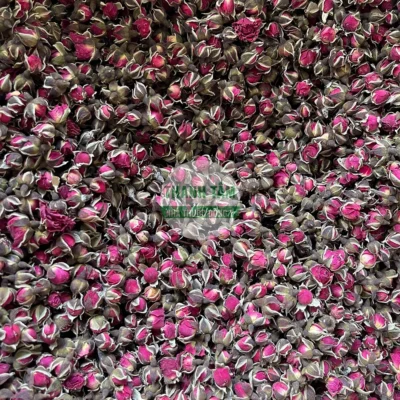
Dried rose buds supplied by Thanh Tam Herbs
6. Indications and contraindications
Indications
Based on TCM pattern differentiation, the herb may be considered for Liver and Stomach Qi discomfort, fullness in the chest or rib area, poor appetite, mild nausea, irregular menstruation, and menstrual pain.
Severe pain, persistent vomiting, fainting, heavy menstrual bleeding, bleeding between periods, or other unusual symptoms require medical assessment.
Contraindications and precautions
Pregnant women should not self-use the herb medicinally. People with heavy menstrual bleeding, bleeding disorders, or those taking anticoagulant or antiplatelet medicines should consult a doctor before use.
People with internal heat, constipation, dry mouth, or hot flashes should use it cautiously. Stop use if rash, swelling, breathing difficulty, nausea, diarrhea, or significant discomfort occurs.
7. Reference herbal combinations with Nụ hồng
- Fullness caused by Qi stagnation: Nụ hồng may be combined with aged tangerine peel and fingered citron to support Qi regulation and harmonize the Stomach.
- Emotional constraint with frequent sighing: Traditional formulas may combine it with cyperus rhizome and curcuma root under professional guidance.
- Irregular menstruation: It may be paired with cyperus rhizome, Chinese angelica, and white peony root after the individual pattern is assessed.
- Menstrual discomfort: Some formulas combine it with motherwort or Chuan Xiong. Avoid self-use during pregnancy or heavy bleeding.
- Aromatic digestive tea: A small amount may be infused with aged tangerine peel or fingered citron and consumed warm after a meal.
These combinations are educational references, not universal prescriptions.
8. Frequently asked questions
- Are dried rose buds used for tea considered a medicinal herb?
Only correctly identified, appropriately processed, food-grade or medicinal-grade buds should be used. Dried ornamental flowers are not automatically suitable. - Can I drink rose bud tea every day?
Avoid high doses or prolonged medicinal use without guidance. Stop if digestive discomfort or other reactions develop. - Can rose bud tea support weight loss or improve skin?
Evidence is insufficient to consider it a reliable weight-loss or skin treatment. - Can people with stomach pain use it?
It may only be considered for selected Qi-stagnation patterns. Persistent or severe pain needs medical evaluation. - Can pregnant women drink it?
Medicinal use during pregnancy is not recommended without approval from a qualified healthcare professional. - How can I identify good-quality material?
Choose intact buds with a natural color, gentle fragrance, clean dry texture, no mold, and transparent sourcing.
👉 Visit Thanh Tam Herbs – a trusted Herbal pharmacy for quality TCM herbs and professional guidance.
Nguồn tham khảo
- Dược điển Việt Nam.
- Lương y Hy Lãn Hoàng Văn Vinh, Cây thuốc vị thuốc Đông y, Nhà xuất bản Hà Nội, 2001.
- Tài liệu, hướng dẫn và thông tin chuyên ngành từ Bộ Y tế.
Rate this article
How useful was this article?
Tác giả bài viết