Clematis Stem | Traditional Herbal Medicines
🌿 Clematis Stem – A TCM Herb for Clearing Heat, Promoting Urination, and Unblocking the Meridians
Clematis Stem, known as Mộc thông in Vietnamese, refers in this article to Caulis Clematidis, the dried climbing stem of Clematis armandii Franch. In TCM, this herb is traditionally used to clear Heat, promote urination, support fluid movement, unblock the Meridians, and help support lactation when the pattern is appropriate.
- Scientific name / Pinyin / Chinese: Caulis Clematidis / Chuan Mu Tong / 川木通.
- Flavors, Nature – Meridian: Bitter, Bland; Cold – associated with the Heart, Lung, Small Intestine, and Bladder Meridians.
- Main benefits: Supports urination, helps reduce edema, clears Heat, unblocks the Meridians, and may support lactation in TCM practice.
- Reference dosage: Commonly 3–8 g daily as a decoction.
1. Origin and description
The medicinal material comes from the climbing stems of Clematis armandii Franch. or Clematis montana Buch.-Ham. ex DC. in the Ranunculaceae family. The stems are harvested in spring or autumn, stripped of the outer bark, and dried.
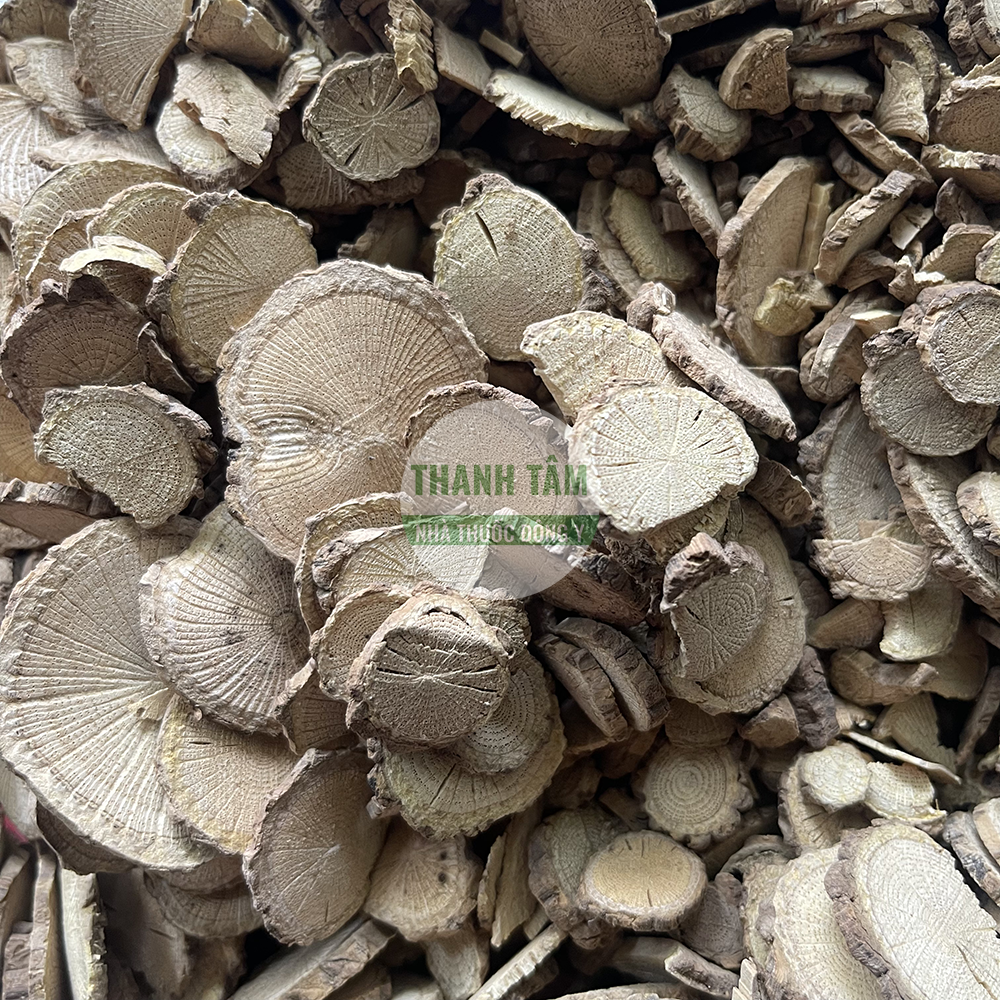
The dried herb is usually cylindrical, slightly curved or twisted, with a yellow-brown surface, longitudinal grooves, and slightly enlarged nodes. It is firm and difficult to break. The cut surface shows pale yellow to yellow-brown wood, radial rays, and visible vessel openings. The odor is mild and the taste is bland.
Before use, the stems are commonly softened, sliced, and dried again. Store in a dry place.
2. Related names of Clematis Stem
Other names: Mộc thông, Bạch mộc thông, Tiểu mộc thông, Xuyên mộc thông, Clematis Stem, Chuan Mu Tong.
Scientific name: Caulis Clematidis.
Pinyin name: Chuan Mu Tong.
Chinese name: 川木通.
The name “Mộc thông” may refer to different botanical sources in herbal literature. Buyers should always verify the scientific name and plant origin. In particular, it should not be confused with Guan Mu Tong from the genus Aristolochia, which may contain aristolochic acids associated with serious kidney toxicity.
3. Flavors, Nature – Meridian
According to traditional herbal references that use Caulis Clematidis, the herb is described as Bitter or Bland in flavor and Cold in nature. It is traditionally associated with the Heart, Lung, Small Intestine, and Bladder Meridians.
Its Cold nature is linked with clearing Heat, while its traditional “unblocking” action refers to urine flow, Meridian flow, and lactation. These are TCM concepts, not direct equivalents of modern medical diagnoses.
4. Benefits of Clematis Stem in TCM
Common traditional uses include:
- Clearing Heat and promoting urination: Often combined with other herbs when urination is scanty, difficult, painful, or dark in patterns identified as Heat or Damp-Heat.
- Supporting reduction of edema: May be included in formulas that promote fluid drainage when swelling is present.
- Unblocking the Meridians: Traditionally combined in some formulas for joint discomfort, numbness, or heaviness associated with Damp-Heat patterns.
- Supporting menstrual flow: Some traditional references mention its use when menstruation is absent or obstructed, depending on the overall pattern.
- Supporting lactation: It may be included in selected postpartum formulas for low milk supply or blocked milk flow when professionally indicated.
These benefits belong to the TCM framework and do not replace medical diagnosis or treatment.
5. How to use and dosage
A commonly referenced dosage is around 3–8 g daily, usually prepared as a decoction. Some references use approximately 3–6 g per day depending on the botanical source, the intended formula, and the individual patient.
In a multi-herb formula, the exact amount should be adjusted according to constitution, symptoms, and professional assessment. Do not increase the dose or use it long term simply to promote urination.
People taking diuretics, blood pressure medication, or medicines that affect fluid balance should consult a healthcare professional or Herb doctor before use. Those with heart or kidney disease should also avoid self-treatment.
6. Indications and contraindications
Indications
Traditional references describe use for edema, painful or frequent urination, scanty urine, numb or aching joints, absence of menstruation, low breast milk supply, and blocked milk flow. Selection should always depend on the TCM pattern rather than the symptom alone.
Contraindications and precautions
Pregnant individuals should not self-use this herb. People who are weak, dehydrated, or prone to low blood pressure should use caution. Anyone with kidney disease should not take it for diuretic purposes without professional supervision.
Seek medical evaluation promptly if painful urination is accompanied by fever, flank pain, blood in the urine, rapidly worsening swelling, shortness of breath, or a marked reduction in urine output.
7. Reference herbal combinations with Mộc thông
- Painful urination with mouth sores from Heat: Some classical formulas combine it with Sheng Di Huang, Zhu Ye, and Gan Cao to clear Heart Heat and support urination.
- Edema with scanty urination: It may be combined with Ze Xie, Fu Ling, or other herbs that support fluid movement, depending on the pattern.
- Joint discomfort associated with Damp-Heat: It may be paired with herbs that dispel Wind, drain Dampness, and unblock the Meridians when appropriate.
- Low milk supply after childbirth: Some traditional formulas combine it with Wang Bu Liu Xing. Breastfeeding technique and possible obstetric causes should also be assessed.
These combinations are for reference only. Avoid combining multiple herbs without appropriate evaluation of constitution, medications, and the underlying condition.
8. Frequently asked questions
- Does Clematis Stem have a diuretic effect? In TCM, it is traditionally used to promote urination and may be included in formulas for scanty urine, painful urination, or edema when the pattern is appropriate.
- What is the usual daily dosage? A common reference range is 3–8 g per day as a decoction. The exact dose depends on the formula and individual condition.
- Can it be taken every day to reduce swelling? No. Edema can be related to heart, kidney, liver, vascular, or other medical conditions and should not be self-treated without identifying the cause.
- Can postpartum women use it for low milk supply? Self-use is not recommended. Low milk supply has many possible causes, and breastfeeding technique, maternal health, and other factors should be assessed first.
- How can I avoid buying the wrong herb? Choose material clearly labeled Caulis Clematidis, preferably with the botanical source Clematis armandii, and purchase from a reliable supplier with transparent sourcing.
- Is it the same as Guan Mu Tong? No. Guan Mu Tong refers to certain Aristolochia species that may contain aristolochic acids and should not be used as a substitute.
👉 Visit Thanh Tam Herbs – a trusted Herbal pharmacy for quality herbs and TCM guidance
Nguồn tham khảo
- Dược điển Việt Nam.
- Lương y Hy Lãn Hoàng Văn Vinh, Cây thuốc vị thuốc Đông y, Nhà xuất bản Hà Nội, 2001.
- Tài liệu, hướng dẫn và thông tin chuyên ngành từ Bộ Y tế.
Rate this article
How useful was this article?
Tác giả bài viết