Cicada Shell | Traditional Herbal Medicines
🌿 Cicada Shell – A TCM Herb for Dispersing Wind-Heat, Soothing the Throat, and Relieving Itching
Cicada Shell, known as Thuyền thoái or xác ve sầu in Vietnamese, is the cast-off exoskeleton of the cicada Cryptotympana pustulata Fabricius, collected after the nymph molts and becomes an adult. In TCM, this herb is classified as Sweet and Cold. It is traditionally used to disperse Wind-Heat, soothe sore throat and hoarseness, help relieve itchy skin eruptions, support red or irritated eyes, and calm certain convulsive patterns when professionally indicated.
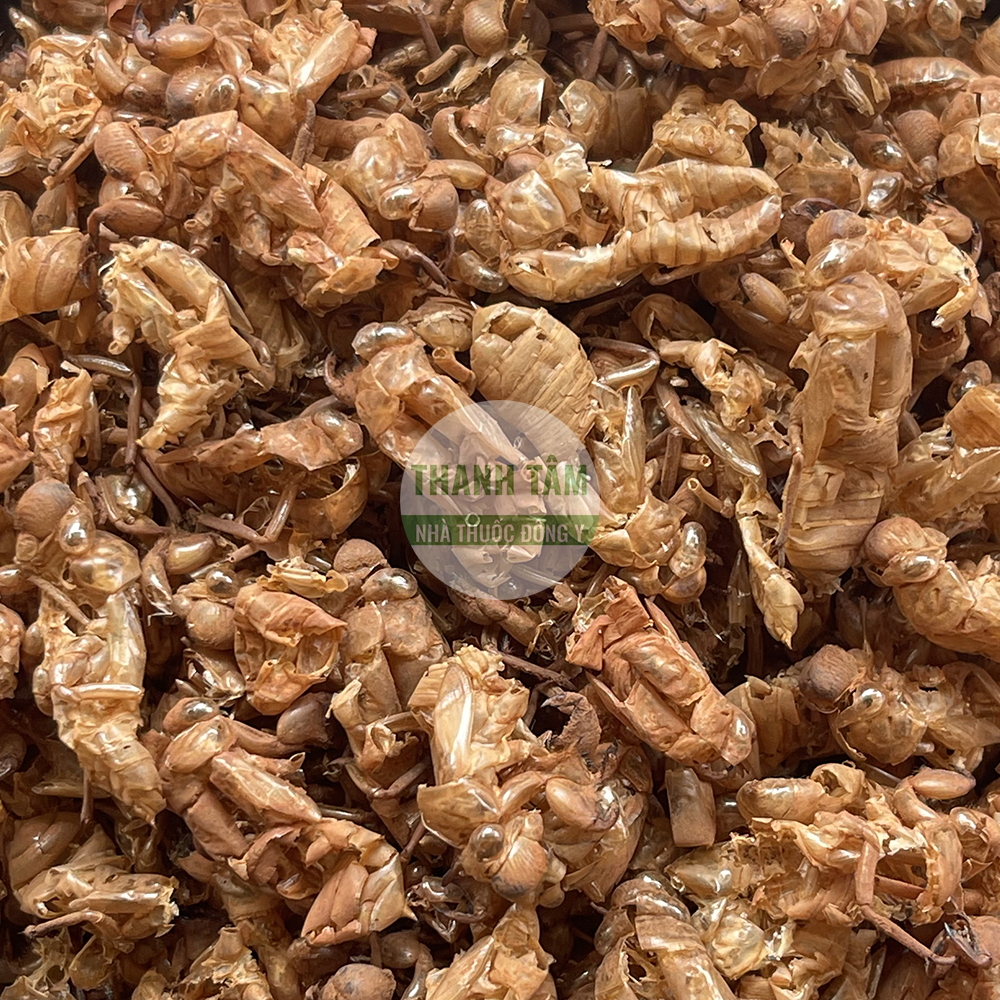
- Scientific name / Pinyin / Chinese: Periostracum Cicadae / Chan Tui / 蝉蜕.
- Flavors, Nature – Meridian: Sweet, Cold – associated with the Lung and Liver Meridians.
- Main benefits: Disperses Wind-Heat, supports sore throat and hoarseness, helps relieve itching and skin eruptions, benefits red eyes, and traditionally calms convulsive patterns.
- Reference dosage: Commonly 3–6 g daily as a decoction, pill, or powder.
1. Origin and description
The medicinal material is the empty shell left behind when a cicada nymph molts into an adult. It is commonly collected from tree trunks in summer and autumn, cleaned, and dried.
The dried material resembles a cicada, is slightly curved, and measures about 3.5 cm long and 2 cm wide. Its surface is yellow-brown and slightly translucent. The head has prominent eyes, the back has a split where the adult emerged, and the abdomen has several segments and three pairs of legs.
The shell is very light, hollow, thin, fragile, nearly odorless, and bland. Store it dry in a closed container away from moisture and insects.
2. Related names of Cicada Shell
Other names: Thuyền thoái, Thiền thoái, Thuyền thuế, Thiền xác, Xác ve sầu, Cicada Shell, Cicada Slough, Cicada Moulting.
Scientific name: Periostracum Cicadae.
Pinyin name: Chan Tui.
Chinese name: 蝉蜕.
In classical terminology, “Chan” refers to the cicada and “Tui” to the shed shell. Good-quality material should be relatively intact, naturally colored, dry, and free from mold.
3. Flavors, Nature – Meridian
According to the Vietnamese Pharmacopoeia, this herb has a Sweet flavor and a Cold nature. It is traditionally associated with the Lung and Liver Meridians.
In TCM theory, its Cold nature and light character are associated with dispersing Wind-Heat. The Lung Meridian is traditionally linked with throat discomfort and hoarseness, while the Liver Meridian is linked with the eyes and certain convulsive patterns.
These are traditional concepts, not modern medical mechanisms.
4. Benefits of Cicada Shell in TCM
Common traditional uses include:
- Dispersing Wind-Heat: Often included in formulas for early-stage Wind-Heat patterns with fever, headache, mild chills, or throat discomfort.
- Soothing the throat and voice: Traditionally used when sore throat, throat irritation, or hoarseness is associated with Wind-Heat.
- Helping skin eruptions surface and relieving itching: Frequently found in traditional formulas for itchy rashes, Wind-related skin eruptions, or certain measles patterns when the eruption does not emerge smoothly.
- Supporting red or irritated eyes: Traditional texts describe an action of clearing Wind-Heat from the eyes and addressing certain superficial visual obstructions.
- Calming convulsive patterns: Some classical formulas use Chan Tui for spasms or convulsions associated with specific TCM patterns. Any seizure, especially in a child, requires urgent medical assessment.
These uses belong to the TCM framework and do not replace appropriate medical diagnosis or treatment.
5. How to use and dosage
According to the Vietnamese Pharmacopoeia, a common reference dosage is 3–6 g daily. The herb may be prepared as a decoction or used in pills and powders, usually in combination with other herbs.
Before use, remove soil and other impurities. Keep the material dry because the thin shells easily absorb moisture and crumble.
Do not increase the dose or use it long term without guidance. People with insect allergies, chronic illness, or regular medication should consult a healthcare professional or Herb doctor.
6. Indications and contraindications
Indications
Traditional references describe use for Wind-Heat colds, sore throat, hoarseness, itchy eruptions, incomplete measles eruption, red eyes with cloudiness, and certain convulsive patterns. Selection should depend on the overall TCM pattern.
Contraindications and precautions
This herb is generally not selected for deficiency patterns without Wind-Heat. Pregnant individuals should not self-use it without professional advice.
Children with high fever, seizures, difficulty breathing, unusual drowsiness, or severe rash need urgent medical care. Herbal preparations should not replace medical treatment for measles or other serious infections.
7. Reference herbal combinations with Thuyền thoái
- Wind-Heat with sore throat and hoarseness: It may be combined with Mint Herb, Niu Bang Zi, Jie Geng, or other herbs that disperse Wind-Heat and benefit the throat.
- Itchy skin eruptions: Xiao Feng San is a classical formula that combines Chan Tui with Jing Jie, Fang Feng, Niu Bang Zi, Ku Shen, and other herbs traditionally used to dispel Wind, clear Heat, and drain Dampness.
- Skin eruption that does not surface smoothly: Some traditional formulas combine it with Niu Bang Zi, Bo He, and other herbs used to release the exterior and encourage eruption.
- Red eyes associated with Wind-Heat: It may be paired with Ju Hua, Mulberry Leaf, or other herbs traditionally used to clear the Liver and benefit the eyes.
These combinations are for reference only. Formula composition and dosage should be adjusted to the individual constitution, symptoms, and professional assessment.
8. Frequently asked questions
- Is Thuyền thoái the shed shell of a cicada? Yes. The medicinal material is the empty exoskeleton left behind after a cicada nymph molts and develops into an adult.
- What is the usual daily dosage? The Vietnamese Pharmacopoeia lists a reference dosage of 3–6 g per day, usually as a decoction, pill, or powder.
- Can it be used for every type of sore throat? No. TCM mainly considers it for Wind-Heat patterns. Sore throat can have many causes, including infection, allergy, reflux, and irritation.
- Can it be given to a child during a seizure? No. Do not attempt to manage a seizure with herbal medicine at home. A child with convulsions needs immediate medical evaluation.
- Can it be used for hives or itchy skin? The herb appears in classical formulas for Wind-related itching and skin eruptions, but the underlying cause should be identified before treatment.
- How should good-quality material be selected? Choose dry, lightweight, relatively intact shells with natural color, no mold, no unusual odor, and minimal impurities.
👉 Visit Thanh Tam Herbs – a trusted Herbal pharmacy for quality herbs and TCM guidance
Nguồn tham khảo
- Dược điển Việt Nam.
- Lương y Hy Lãn Hoàng Văn Vinh, Cây thuốc vị thuốc Đông y, Nhà xuất bản Hà Nội, 2001.
- Tài liệu, hướng dẫn và thông tin chuyên ngành từ Bộ Y tế.
Rate this article
How useful was this article?
Tác giả bài viết