Menthol Crystals | Traditional Herbal Medicines
🌿 Menthol Crystals – Cooling Aromatic Crystals Used in TCM and Topical Preparations
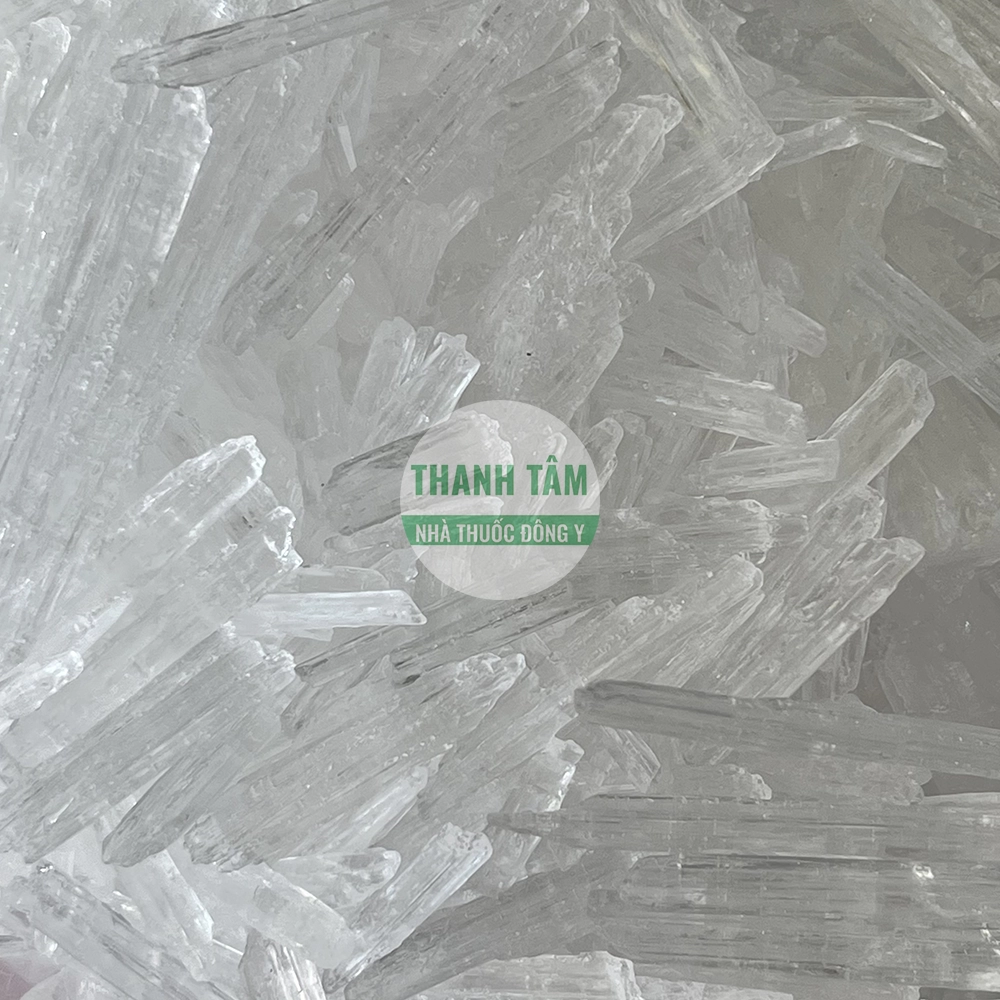
Menthol Crystals, known in Vietnamese as Bạc hà băng or Bạc hà não, are crystallized menthol separated from mint essential oil. They are not the dried stems and leaves of the mint plant. The crystals have a strong mint aroma, a Pungent taste, and a distinctive cooling sensation. They are generally used in small amounts in topical rubs, inhalation products, lozenges, and pharmaceutical formulations.
- Scientific name / Pinyin / Chinese: L-Menthol / Bo He Nao / 薄荷脑.
- Flavors, Nature – Meridian: Pungent, Cool – traditionally associated with the Lung and Liver Meridians.
- Main benefits: Produces a cooling sensation, helps relieve itching and mild local discomfort, and creates a feeling of clearer breathing in selected preparations.
- Reference dosage: Mainly used externally according to a standardized product formula; do not self-administer concentrated menthol crystals orally.
1. Origin and description
Menthol is isolated from the essential oils of mint species rich in menthol, which belong to the Lamiaceae family. The raw material is obtained through steam distillation, then cooled so menthol can crystallize and be purified.
The finished material usually appears as colorless needle-like or prismatic crystals, or as a white crystalline powder. It has a mint aroma and characteristic cooling sensation. Menthol is only slightly soluble in water but dissolves readily in ethanol and oils.
2. Related names of Menthol Crystals
Other names: Bạc hà băng, Bạc hà não, Tinh thể bạc hà, menthol, menthol crystal, mint crystals.
Scientific name: L-Menthol.
Pinyin name: Bo He Nao.
Chinese name: 薄荷脑.
These crystals should not be confused with Bạc hà thảo, which refers to the dried aerial parts of the mint plant. Mint essential oil is also different because it contains a mixture of volatile compounds rather than purified menthol alone.
3. Flavors, Nature – Meridian
According to Chinese herbal references, menthol is described as Pungent in flavor and Cool in nature. Some traditional references associate it with the Lung and Liver Meridians. However, because this is an isolated aromatic substance rather than the complete mint herb, the Meridian properties of whole mint should not automatically be applied in exactly the same way.
Traditional descriptions emphasize dispersing Wind and clearing Heat, while modern use focuses more on cooling, anti-itch, aromatic, and local soothing effects. The crystalline material must be used in controlled proportions and should never be dosed like whole dried mint.
4. Benefits of Menthol Crystals in TCM
- Creates a cooling sensation: Menthol activates cold-sensitive receptors, producing a rapid sensation of coolness at the area of contact.
- Helps relieve itching: At an appropriate concentration in topical products, menthol may help soothe minor itching and skin discomfort.
- Supports mild local pain relief: It is commonly found in balms, oils, gels, and other topical preparations for minor discomfort.
- Creates a feeling of clearer breathing: The strong mint aroma can make the nose feel more open, although it does not physically remove nasal blockage.
- Provides aroma and flavor: Small amounts are used in lozenges, mouth rinses, oral-care products, and selected pharmaceutical preparations.
These uses are for traditional and product-reference purposes and do not replace medical treatment. Concentrated menthol should be treated as a potent ingredient rather than as an everyday herbal tea.
5. How to use and dosage
Unlike Bạc hà thảo, which may be measured in grams for herbal decoctions, Menthol Crystals are used in much smaller amounts within standardized formulations. Modern applications mainly involve external preparations or use as a cooling or flavoring ingredient according to product specifications.
Some older Chinese herbal references mention oral amounts of approximately 0.02–0.1 g when incorporated into lozenges or appropriately diluted preparations. This should not be used as a guide for self-dosing pure crystals at home. Do not weigh and swallow the raw crystals directly. For external use, avoid applying concentrated material to damaged skin, the eyes, or sensitive mucous membranes.
6. Indications and contraindications
Indications
In properly formulated products, menthol may be used to create a cooling sensation, help reduce itching, ease minor local discomfort, and provide a refreshing aroma or flavor. It may appear in balms, oils, inhalation products, lozenges, gels, creams, and oral-care preparations.
Contraindications and precautions
Do not swallow raw concentrated crystals or use excessive amounts. Large exposures may cause nausea, dizziness, seizures, reduced consciousness, or coma. Concentrated menthol can also irritate the eyes, skin, and mucous membranes and may cause chemical burns when misused.
Do not apply concentrated menthol close to the nostrils or face of infants and young children because strong vapors may trigger dangerous respiratory reactions. Pregnant or breastfeeding people and children should use menthol-containing products according to professional guidance. Store the crystals carefully, similar to camphor or borneol-type aromatic substances, to reduce accidental ingestion.
7. Reference herbal combinations with Bạc hà băng
Because this is a concentrated crystalline ingredient, it is more appropriate to use it in standardized products than to decoct it together with whole herbs at home.
- Topical oils or balms: May be combined with camphor, cajeput oil, eucalyptus oil, or methyl salicylate in properly formulated topical products.
- Throat lozenges: Small controlled amounts may be used with ingredients that soothe the throat and provide a cooling flavor.
- Anti-itch preparations: Menthol may be included in creams, gels, or solutions at controlled concentrations to help reduce minor itching.
- Inhalation products: It may be combined with eucalyptol or selected aromatic oils according to a standardized product formula.
Do not prepare concentrated mixtures of menthol, camphor, or borneol-like aromatic substances for drinking, prolonged enclosed inhalation, or application over large areas of skin.
8. Frequently asked questions
- Are Menthol Crystals the same as Bạc hà thảo? No. Bạc hà thảo is a whole herbal material, while menthol crystals are a concentrated substance isolated from mint essential oil or produced to a standard.
- Can I use several grams like dried mint leaves? No. The crystals contain concentrated menthol and must not be dosed like whole dried mint.
- Are they toxic? Menthol is widely used at appropriate concentrations. However, concentrated or excessive exposure can cause serious toxicity.
- Are they the same as camphor or borneol? No. They are chemically different substances, although all are strong aromatic materials that require controlled use and should not be swallowed accidentally or applied in concentrated form.
- How should they be stored? Keep the material tightly sealed in a cool, dry place away from heat and direct sunlight, and always store it out of reach of children.
👉 Visit Thanh Tam Herbs – a trusted Herbal pharmacy for quality herbs and TCM guidance
Nguồn tham khảo
- Dược điển Việt Nam.
- Lương y Hy Lãn Hoàng Văn Vinh, Cây thuốc vị thuốc Đông y, Nhà xuất bản Hà Nội, 2001.
- Tài liệu, hướng dẫn và thông tin chuyên ngành từ Bộ Y tế.
Rate this article
How useful was this article?
Tác giả bài viết