Mulberry Leaf | Traditional Herbal Medicines
🌿 Mulberry Leaf – A TCM Herb for Clearing Heat, Moistening the Lung, and Supporting Eye Comfort
Mulberry Leaf, known in Vietnamese as Tang diệp, is the dried leaf of the white mulberry tree and has a long history of use in TCM. It is commonly referenced for Wind-Heat patterns, dry cough related to Lung Dryness, red or irritated eyes, dizziness, and headache associated with Liver Heat.
- Scientific name / Pinyin / Chinese: Folium Mori albae / Sang Ye / 桑叶.
- Flavors, Nature – Meridian: Sweet, Bitter, Cold – associated with the Lung and Liver Meridians.
- Main benefits: Disperses Wind-Heat, helps soothe dry cough caused by Heat and Dryness, clears Liver Heat, and supports relief from red eyes or dizziness according to TCM theory.
- Reference dosage: Commonly 5–10 g daily, prepared as a decoction or used as part of a herbal formula.
1. Origin and description
Mulberry Leaf is the dried leaf of Morus alba L., a member of the Moraceae family. The white mulberry tree is widely cultivated throughout Asia. Its leaves are known as food for silkworms and are also collected for medicinal use.
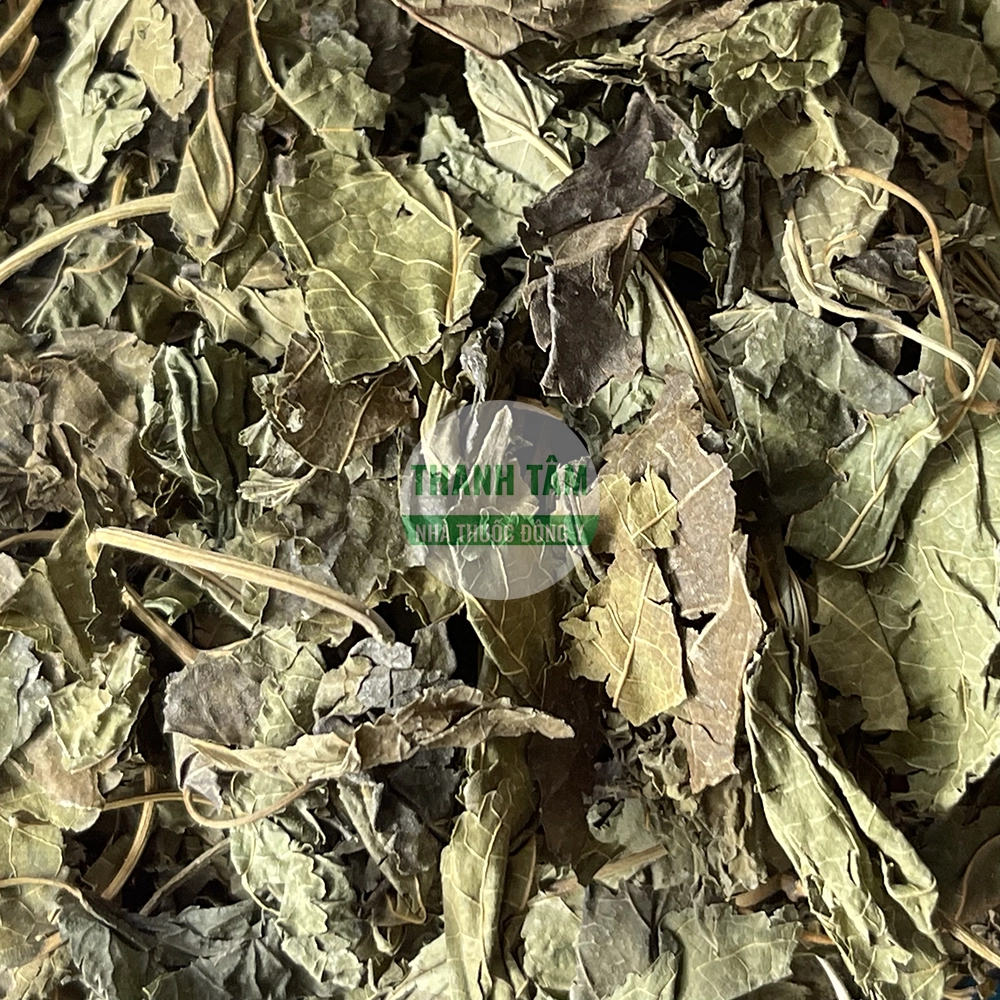
The leaves are generally harvested near the end of the growing season, cleaned, and dried. Each leaf has a petiole and an oval to broadly ovate blade with serrated edges and visible veins.
After drying, the color usually ranges from yellow-green to light yellow-brown. The texture is brittle, the odor mild, and the taste slightly bitter and astringent. Good-quality material should be evenly dried, naturally colored, and free from mold or unusual odor.
2. Related names of Mulberry Leaf
Other names: Tang diệp, Lá dâu, Lá dâu tằm, Dâu diệp, mulberry leaf, white mulberry leaf.
Scientific name: Folium Mori albae; botanical source: Morus alba L.
Pinyin name: Sang Ye.
Chinese name: 桑叶.
This herb should not be confused with Sang Bai Pi, the root bark; Sang Zhi, the young twig; or Sang Shen, the fruit. Although they come from the same plant, each part has different traditional functions in TCM.
3. Flavors, Nature – Meridian
In TCM, the herb is described as Sweet and Bitter in flavor and Cold in nature. It is associated mainly with the Lung and Liver Meridians. These properties support its traditional role in clearing Heat and easing dryness. Through the Lung Meridian, it is used for cough with Wind-Heat or Lung Dryness. Through the Liver Meridian, it may be selected for red eyes, blurred vision, headache, or dizziness associated with Liver Heat.
4. Benefits of Mulberry Leaf in TCM
- Disperses Wind-Heat: Traditionally used during the early stage of Wind-Heat presentations with mild fever, headache, dry throat, or cough.
- Clears the Lung and moistens Dryness: May help soothe dry cough, dry throat, or scanty phlegm when these symptoms are identified as Lung Heat or Lung Dryness.
- Clears Liver Heat and supports the eyes: Commonly referenced for red, dry, painful, or watery eyes and for blurred vision related to Wind-Heat or Liver Heat.
- Supports headache and dizziness: May be combined with other Liver-clearing herbs when headache or dizziness appears in a suitable TCM pattern.
- Cools the Blood: Some traditional references also describe a Blood-cooling action, especially when Heat affects the Blood level.
These traditional benefits belong to TCM practice and should not be interpreted as a substitute for medical diagnosis or treatment.
5. How to use and dosage
A commonly referenced dosage is 5–10 g per day. The dried leaves are usually decocted with water and combined with other herbs according to the person’s symptoms and TCM pattern.
For powders, concentrated granules, extracts, or capsules, follow the product directions or advice from a qualified Herb doctor. Concentrated preparations are not equivalent gram-for-gram to the raw herb.
Do not increase the amount simply because symptoms persist. Recurrent cough, persistent eye irritation, or frequent dizziness should be properly assessed.
6. Indications and contraindications
Indications
In TCM, Mulberry Leaf may be considered for Wind-Heat patterns that include cough, headache, or dry throat; dry cough related to Lung Dryness; red or irritated eyes; blurred vision; and headache or dizziness associated with Liver Heat. Selection should be based on pattern differentiation rather than symptoms alone.
Contraindications and precautions
Because the herb is Cold in nature, people with a tendency toward abdominal coldness, loose stools, poor appetite, or Spleen-Stomach Cold deficiency should use it cautiously.
Pregnant or breastfeeding people, children, and anyone taking long-term medication should seek professional guidance before regular use.
A prolonged cough, high fever, shortness of breath, coughing up blood, severe eye pain, or reduced vision requires medical assessment.
7. Reference herbal combinations with Tang diệp
- Wind-Heat with cough and sore throat: May be combined with Ju Hua, Bo He, Lian Qiao, Jie Geng, and Gan Cao.
- Dry cough and dry throat due to Dryness-Heat: Common combinations include Xing Ren, Sha Shen, and Mai Men Dong.
- Red, painful, or blurred eyes: May be paired with Ju Hua, Xia Ku Cao, or other herbs used to clear Liver Heat and support the eyes.
- Headache or dizziness associated with Liver Heat: May be combined with Ju Hua and Gou Teng according to the pattern.
Sang Ju Yin is a well-known classical formula containing mulberry leaf, traditionally referenced in early Wind-Warmth patterns when cough is prominent. Formula selection should be individualized.
8. Frequently asked questions
- Can I drink mulberry leaf tea every day? Daily long-term use is not appropriate for everyone. People who tend to feel cold, have loose stools, or take regular medication should use it cautiously and seek professional advice if they plan to use it frequently.
- Can this herb help with cough? In TCM, it is mainly used for cough associated with Wind-Heat, Lung Heat, or Lung Dryness. A persistent or worsening cough should be medically evaluated.
- Can it be used for red eyes? The herb is traditionally used to clear Liver Heat and support eye comfort, but severe pain, light sensitivity, discharge, or reduced vision requires prompt eye care.
- Are medicinal mulberry leaves the same as ordinary mulberry leaf tea? They may come from the same plant, Morus alba, but medicinal material should have controlled sourcing, identification, processing, storage, and dosage.
- How should I choose good-quality dried leaves? Look for naturally colored, evenly dried leaves with minimal impurities, no mold or insect damage, no unusual odor, and clear sourcing from a reliable Herbal pharmacy.
👉 Visit Thanh Tam Herbs – a trusted Herbal pharmacy for quality herbs and TCM guidance
Nguồn tham khảo
- Dược điển Việt Nam.
- Lương y Hy Lãn Hoàng Văn Vinh, Cây thuốc vị thuốc Đông y, Nhà xuất bản Hà Nội, 2001.
- Tài liệu, hướng dẫn và thông tin chuyên ngành từ Bộ Y tế.
Rate this article
How useful was this article?
Tác giả bài viết